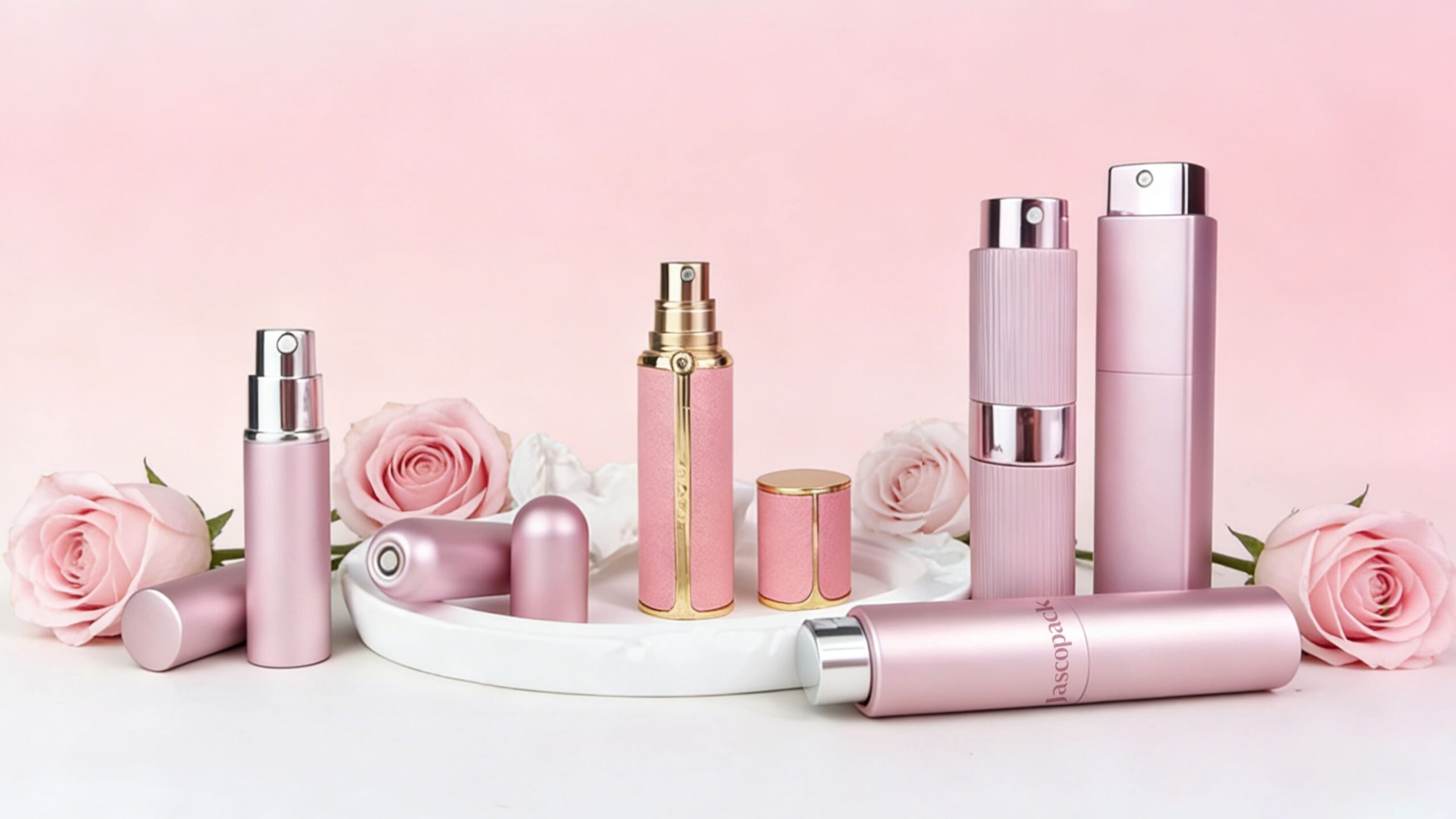

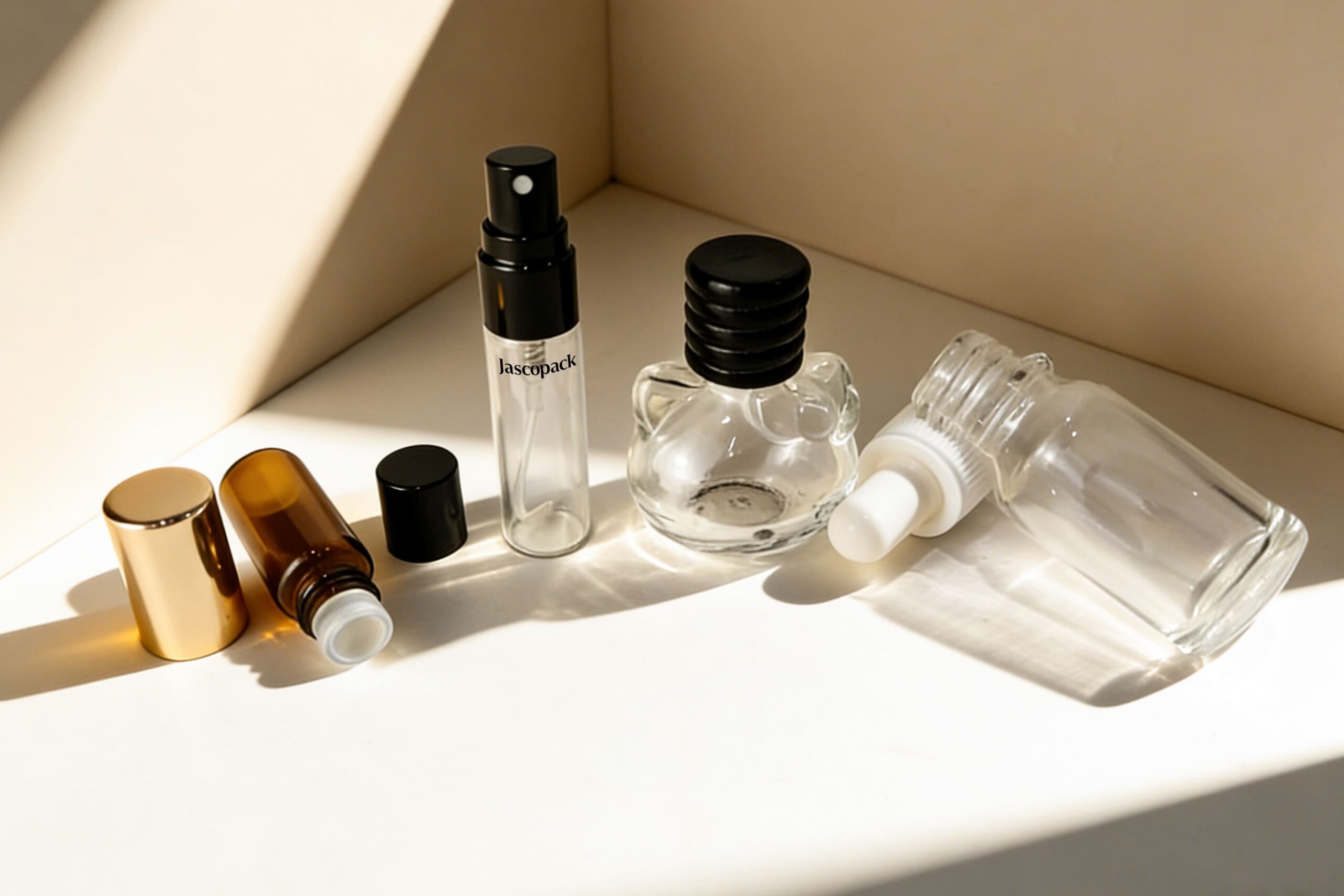
In the design and production of perfume bottles, accurate perfume bottle size, capacity specifications and material thickness are key elements.
Unit confusion not only leads to sample deviation, production delays, and increased costs but may also affect brand image and user experience.
Jascopack, from trial perfume spray bottles to core formal packaging, guarantees the matching of customized bottle type, capacity, and nozzle throughout the whole process, and helps the brand improve product quality and market competitiveness.
Why Does Unit Confusion Affect Perfume Packaging?
In the perfume and cosmetics packaging industry, “unit” is often one of the key factors that are most easily ignored but have a huge impact. From the actual production experience of manufacturers, unit confusion is not simply a communication issue, but often directly triggers a series of production and packaging supply chain risks.
For perfume brands, mixing M, MM, ML, and Mil may directly affect product development and production results, including:
Specification error: The bottle specifications are inconsistent with the design, resulting in the sample deviating from expectations and requiring redevelopment.
Structural mismatch: The nozzle and bottleneck diameters do not match, resulting in liquid leakage and affecting the user’s experience.
Cost increase: Repeated sampling or mold rework increases the brand’s additional development costs, resulting in losses.
Brand risk: The risk of customer complaints caused by product quality issues affects brand reputation and repurchase rate.
Whether purchasing perfume spray bottles, developing customized bottle types, or conducting mass production, an accurate understanding and standardized use of M, MM, ML, and Mil are not only related to the accuracy of the product itself but also can directly save costs, shorten delivery time, and improve the market performance of the brand.
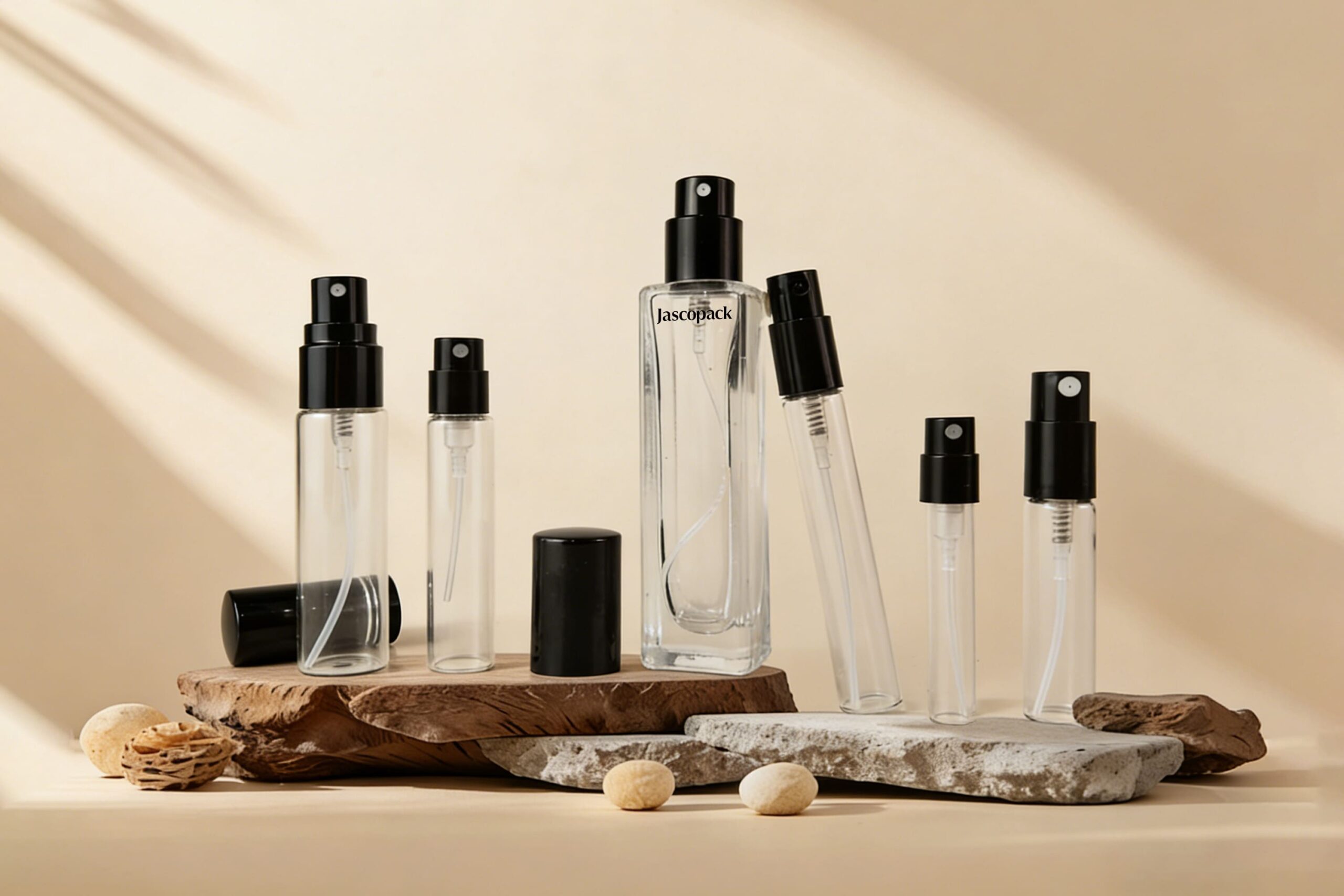
What Do M, Mm, Ml, and Mil Mean Respectively?
In fragrance packaging, understanding the essential differences between these units is the basis for avoiding design errors and ensuring production.
| Unit | Full Name | Meaning | Application in Packaging |
| M | Meter | Unit of length | Mainly used for production lines or material length, rarely for individual packaging |
| MM | Millimeter | One-thousandth of a meter | Bottle height, diameter, neck size |
| ML | Milliliter | Unit of volume | Perfume capacity |
| Mil | Thousandth of an inch | Unit of thickness | Plastic, inner liner, and film materials |
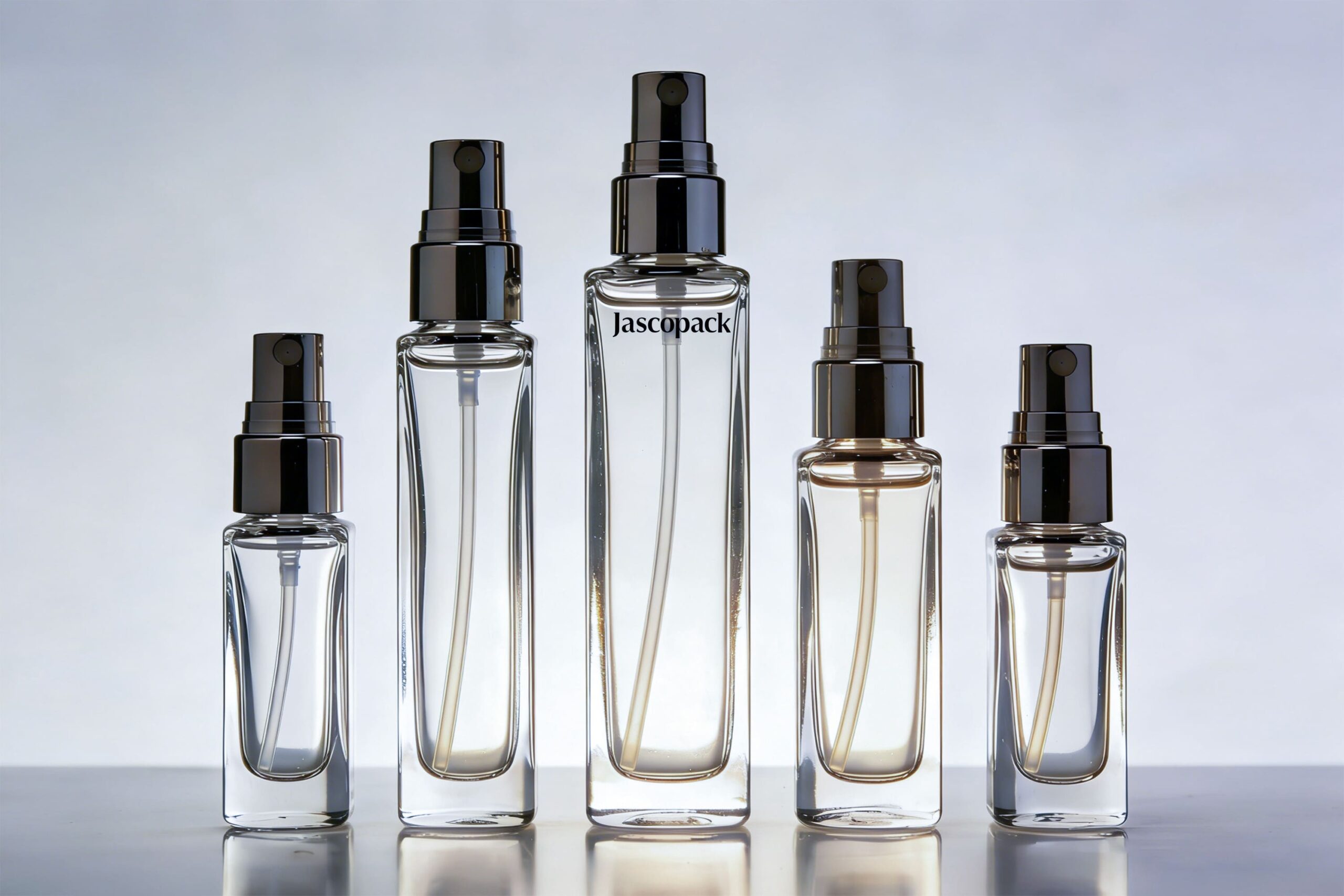
How Do Mm, Ml, Mil, and M Affect the Design and Production of Perfume Bottles?
In the process of perfume bottle design, the unit is not only the basic data, but also the key parameter that determines the product structure design, functional performance, and production cost.
MM Determines the Size of the Bottle Body
MM is the most critical dimension unit used to define detailed parameters such as bottle height and diameter, bottle mouth specifications, etc.
During production, a glass bottle tolerance of just ±0.1–0.2mm can affect whether the bottle seals properly or leaks. The spray pump head and the glass bottle mouth must be precisely matched; otherwise, the spray will be unstable or cannot be used normally.
Once the perfume bottle size is improperly controlled, not only will the user experience be affected, but also the whole batch of products may be unqualified. Jascopack’s standardized glass spray bottle strictly controls a tolerance of ± 0.1mm to ensure that the nozzle and the bottle mouth are accurately matched and avoid assembly deviation.
ML Defines the Capacity of Perfume
ML is a liquid volume unit commonly used in the global cosmetics industry to define the capacity of perfume bottles.
Capacity specification table of common perfume:
| Capacity (ML) | Bottle Type | Usage Scenario | Product Positioning |
| 5ml Perfume Bottle | Sample Bottle / Mini Spray Bottle for Purse | Trial pack, Travel pack | Traffic-driving product |
| 10ml Perfume Bottle | Travel Atomizer / Pocket Perfume Spray | On-the-go carry | Light-consumption product |
| 30ml Perfume Bottle | Small Glass Bottle | Entry-level full size | Targeted at new users |
| 50ml Perfume Bottle | Standard Perfume Bottle | Mainstream sales size | Mass-market product |
| 100ml Perfume Bottle | Full-size Glass Bottle | Standard full size | Core product |
In actual scenarios, 30ml, 50ml, and 100ml are the most mainstream market specifications, while 5ml and 10ml are more commonly used for trial-size perfume and travel-size perfume containers for on-the-go portability.
Therefore, different capacities will not only affect the specifications of perfume bottles, but also directly affect the brand’s product positioning and use scenarios.
Mil Determines Packaging Strength
Mil is a commonly used thickness unit in the packaging industry in the United States, used to describe the thickness of plastic bottles, inner liners, and flexible packaging materials.
From the perspective of materials, the thickness can directly affect the sealing performance of the perfume bottle and overall package reliability:
Packaging durability
The thickness can affect the compression resistance and impact resistance of materials, directly affecting the stability of perfume bottles during transportation and use.
Transportation safety
Reasonable thickness can effectively reduce the risk of damage and leakage, minimize losses, and address after-sales problems in transportation logistics.
Product texture
The thickness of perfume bottle materials will affect the hand feel and appearance quality, which determines the user’s perception of the brand.
Our perfume spray bottles are made of high-quality materials with strict thickness control to improve the durability and transportation safety of the bottle body, while ensuring the touch and visual texture, in line with your brand’s exclusive perfume positioning.
M (meters)
As a unit of length, M is not directly used for the specification design of a single perfume bottle.
In actual production, M can be used for calculating the length of packaging materials, such as product films, label rolls, etc., to facilitate production planning.
Jascopack provides various perfume spray bottle capacities to meet different market needs, from trial, travel, entry-level perfume packaging to customized perfume bottle design. Each perfume bottle can be customized according to its shape, color, capacity, etc. to ensure a good user experience.
Not sure whether to choose 5ml, 10ml, or 30ml perfume spray bottle? Click here for free capacity and bottle matching suggestions.

Common Unit Errors in the Purchase of Perfume Bottles

In the purchase process of perfume bottles, unit error is one of the most common and easily overlooked problems.
Especially in transnational communication and multi supply chain cooperation, the wrong use of units will directly lead to the deviation of custom perfume bottle mold design and even the failure of production samples.
Confusing ML and MM
During the inquiry stage, some brands only provide a parameter of “10” without specifying the unit, making it difficult to determine whether it refers to a capacity of 10ml or a size of 10mm.
Such ambiguous information can also affect critical components like dip tube length perfume, leading to incorrect internal configurations, and sample results deviating from expectations and increasing brand communication time and costs.
Misunderstanding of the Mil Thickness Unit
If you have an inaccurate understanding of Mil, you may choose the wrong material thickness, which can lead to:
The packaging thickness is too thin, which is prone to deformation and damage during transportation, increasing the risk of loss;
If the packaging thickness is too thick, excessive use of materials will result in high costs and a decrease in brand profits.
Mixing Metric and Imperial Units
If units are mixed in communication or drawings without clear labeling, it is very easy to cause dimensional understanding deviation. These types of errors are often not immediately discovered, but are only exposed during the sampling or assembly stage.
For example, if the bottle body and nozzle cannot be matched, the components are incompatible, and the specifications need to be readjusted, it directly affects the product’s progress.
Neglecting Tolerances Leads to Mismatched Parts
For example, only “18mm” is given, but the tolerance of ± 0.1mm or ± 0.2mm is not specified.
When the actual production size deviates, the sealing between the spray pump head and the bottle mouth will become poor, the cover will become loose or too tight, resulting in leakage or assembly difficulties.
Worried about product specifications or unit errors? Click here to send your requirements, and we can help you review packaging parameters for free to reduce procurement risks.

Packaging Unit Conversion
In the packaging and manufacturing process of perfume, unit conversion is not only a simple mathematical calculation, but also a key factor affecting product accuracy, mold accuracy and overall production efficiency.
Unit Conversion Commonly Used in Perfume Packaging
1 ml=1 cc (cubic centimeter) – used for liquid filling, capacity identification, and labeling specifications
1 mm=0.03937 inches – used for structural dimension design and international drawing communication
1 mil=0.0254 mm – used for defining the thickness of plastic materials and flexible packaging
International Unit Differences in Packaging
In the global supply chain, there are differences in the unit systems used in different regions:
China and Europe: mainly using metric units MM and ML
US market: commonly used imperial units are inches and mil
This difference makes unit conversion and clarity of labeling particularly crucial in international procurement.
For key dimensions, such as bottle mouth and thread structure matching, to avoid relying on simple conversion values, Jascopack conducts double verification of perfume bottle size through drawings and samples.
International Standards and Compliance Requirements
In the global perfume and cosmetics packaging market, compliance is not only a requirement but also a basic condition for products to enter different markets.
Label Compliance Requirements
In most international markets, perfume and cosmetics must use ML as the main identification unit and clearly mark the product capacity.
The European and Asian markets typically use milliliters as the sole unit of capacity; In the US market, it is recommended to label both ml and fl. oz to comply with local consumption habits.
If the labeling unit is not standardized, it will cause delays in product customs clearance or affect market sales restrictions.
Material Safety and Compliance
Material compliance is directly related to product safety and brand responsibility. If the materials do not meet the requirements, it may not only trigger product recalls but also bring legal risks and have a long-term impact on brand reputation.
Transportation and Structure
Before mass production, the packaging system usually needs to pass the perfume drop test standard and sealing test to ensure safe transportation and use.
Good structural design can not only effectively protect product integrity, but also significantly reduce transportation losses and after-sales risks.
As a professional packaging manufacturer of perfume bottles, we have exported to more than 100 countries, meeting international standards such as ISO9001, ISO14001, SEDEX, FDA 21 CFR, BPA Free, REACH, RoHS, and providing MSDS documentation for all packaging materials.
Each perfume spray bottle has a relevant non-toxic and harmless test report to help the brand smooth customs clearance and fast launch, reduce legal risk and return rate.
Need a perfume bottle packaging scheme that meets your brand’s market? Click here to contact us for compliance advice and material support.
How to Avoid Packaging Unit Errors in Procurement?
In the process of purchasing perfume bottles, unit errors are generally caused by incomplete important information or non-standard communication. To reduce risks and improve development efficiency, it is recommended to establish clear product unit specifications during the design phase.
Clear Specifications
In the RFQ stage, all data specifications and their units must be clearly defined, including capacity ML, size MM, and material thickness MM or mil, to avoid using vague numerical descriptions such as “10” or “50” and improve sampling efficiency.
Confirm Using Drawings
Try to use 2D or 3D technical drawings instead of textual descriptions. Through a rigorous procurement drawing verification process, product structure and dimensional requirements can be more intuitively expressed.
The drawing needs to show the size, tolerance and structural details of perfume bottles to ensure the assembly relationship between the bottle body, nozzle and bottle cap.
Dual Unit Annotation
When it comes to international supply chain or multi regional collaboration, it is necessary to provide dual unit markings for metric mm and ml and imperial inch and mil, and to indicate both units at the same time, which can help reduce the risk of errors in cross-border communication.
Proofing Verification
The proof confirmation before mass production is an important link to ensure the smooth landing of the perfume bottle design, and can provide the results of the first article inspection of packaging. The sample should not only confirm its appearance, but also focus on testing:
Actual capacity
Confirm that the labeled capacity (ml) is consistent with the actual filling capacity to avoid any deviation in capacity that affects compliance and user experience.
Dimension precision
Check whether the key dimensions are within the tolerance range, ensure the consistency of batch production of perfume bottles, and avoid assembly deviation and poor sealing.
Compatibility test
Verify the matching between the nozzle and the bottle mouth, including a comprehensive compatibility test spray pump, sealing test, and spray effect, to ensure that there will be no problems such as uneven spray and unstable assembly during transportation and use.
Need to confirm the specifications of your perfume bottles or obtain samples? Click to contact us for exclusive packaging solutions.
Conclusion
Understanding the difference between M, ML, MM, and Mil in perfume packaging is not only basic knowledge, but also a key parameter to ensure the fineness of perfume bottles, user experience and market compliance. Size, capacity and material thickness not only determine the tightness and sense of use of perfume bottles, but also directly affect brand production costs and supply chain efficiency.
From design to mass production, as a professional cosmetic glass bottle manufacturer, Jascopack provides controllable and reliable packaging solutions through standardized specifications, drawing verification and proofing confirmation, helps brands reduce return risks, improve the quality of perfume bottles, and establish a professional and reliable image in the minds of users.