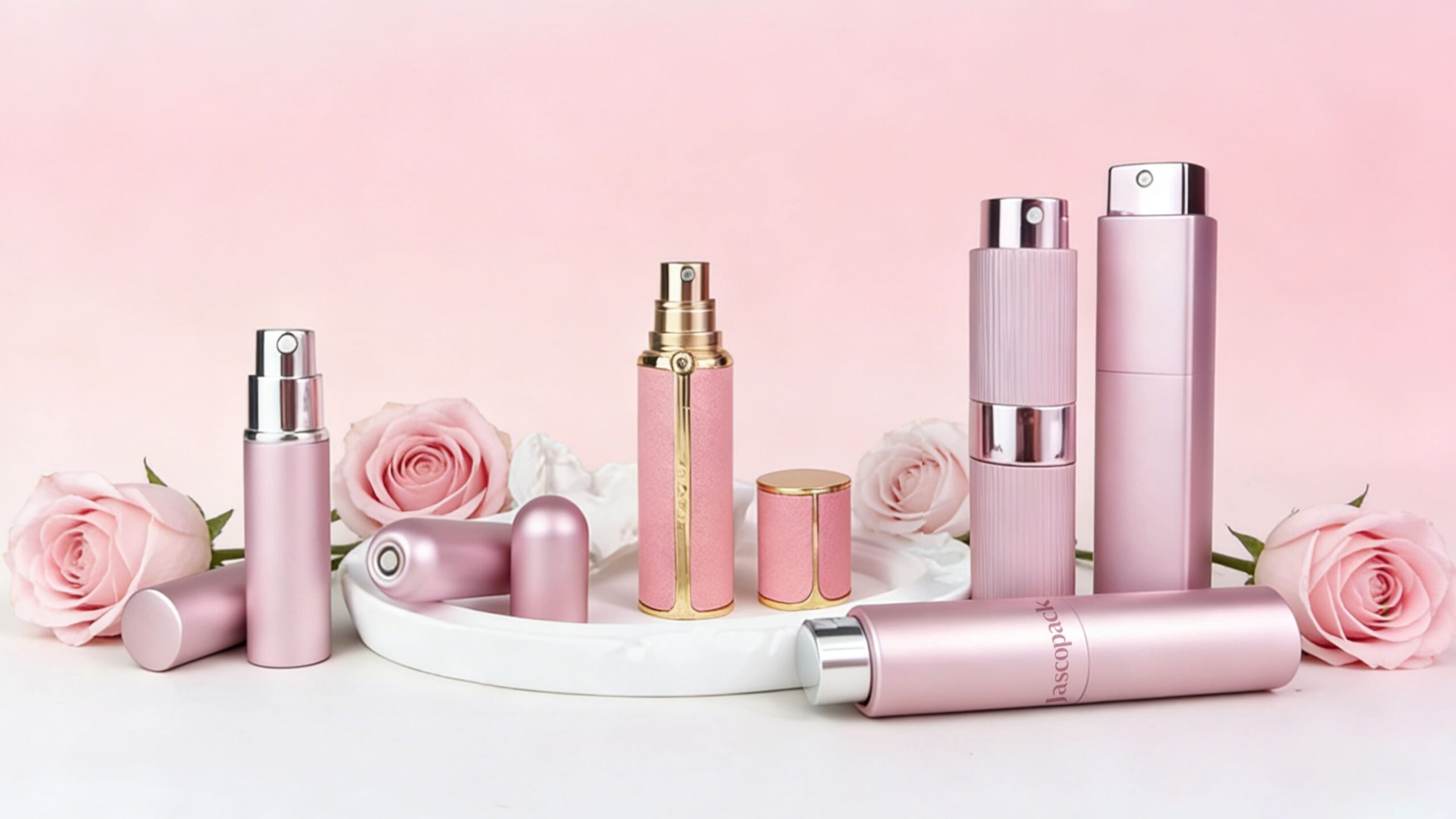

Perfume bottles may appear simple, but every component is crucial. They not only influence brand image and product performance but also determine the product’s competitiveness on the shelf.
This guide provides a detailed overview of the key components and common materials of perfume bottles, as well as important considerations for selecting them.
What Are the Main Components of a Perfume Bottle?
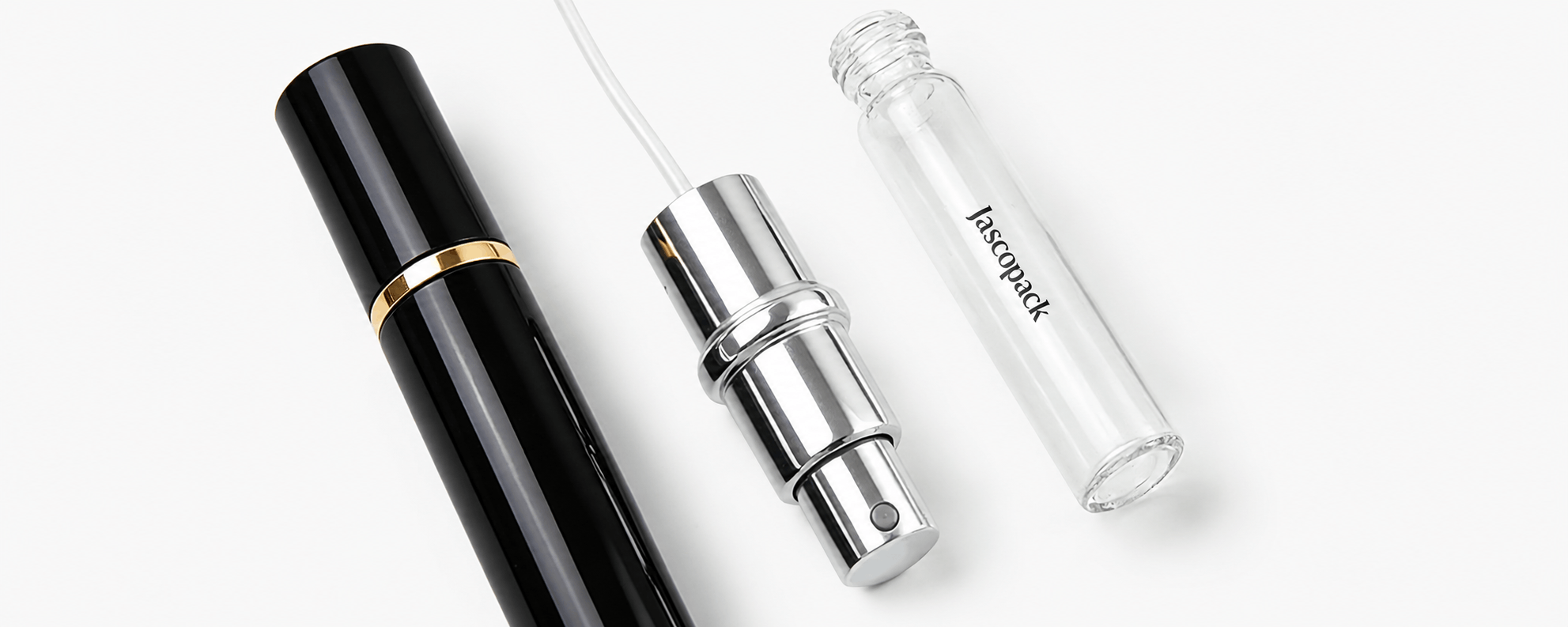
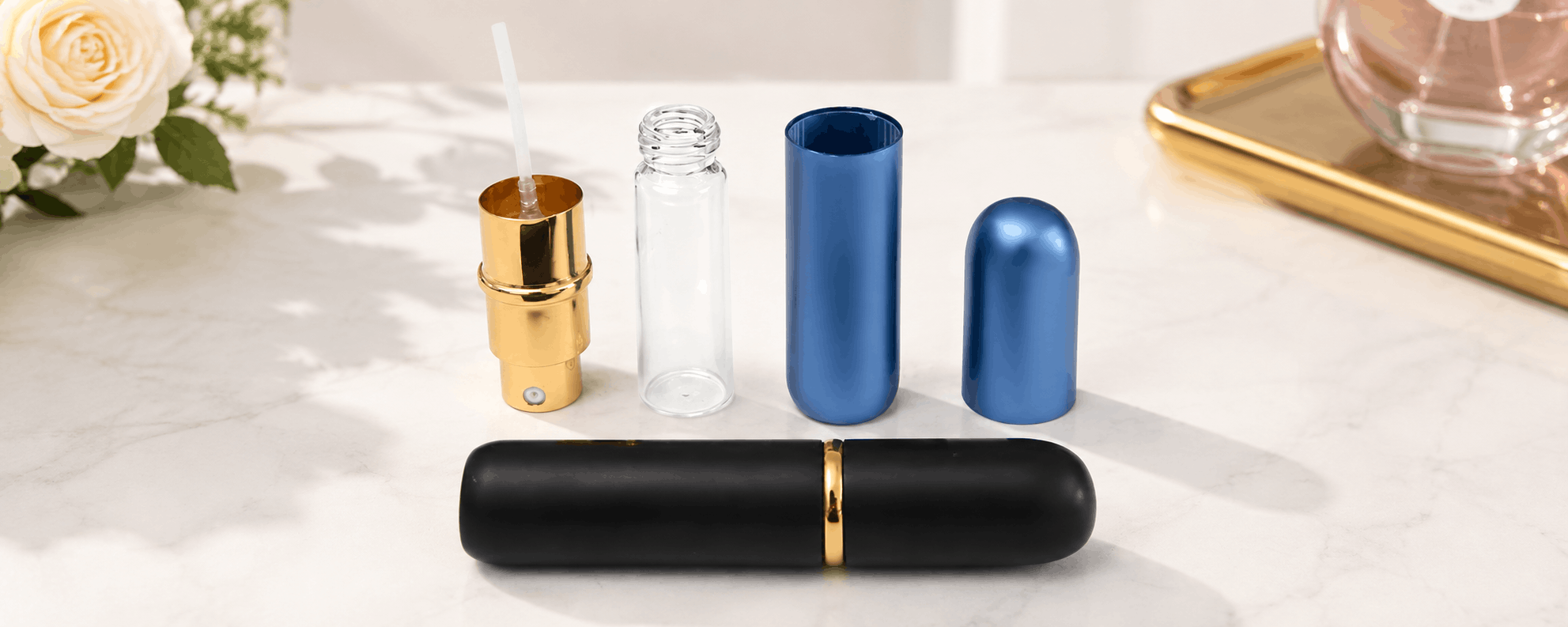
A complete perfume spray bottle package consists of the bottle body, bottle neck, cap, actuator, nozzle, spray pump, sealing gasket, dip tube, and other assembly perfume bottle structures.
Although these parts may look small, they can affect the overall performance of the package. The combination of bottle components determines factors such as appearance, spraying experience, sealing reliability, and compatibility with different fragrance formulas.
Perfume Bottle Cap: Design Impact and Protection
Common Perfume Cap Materials
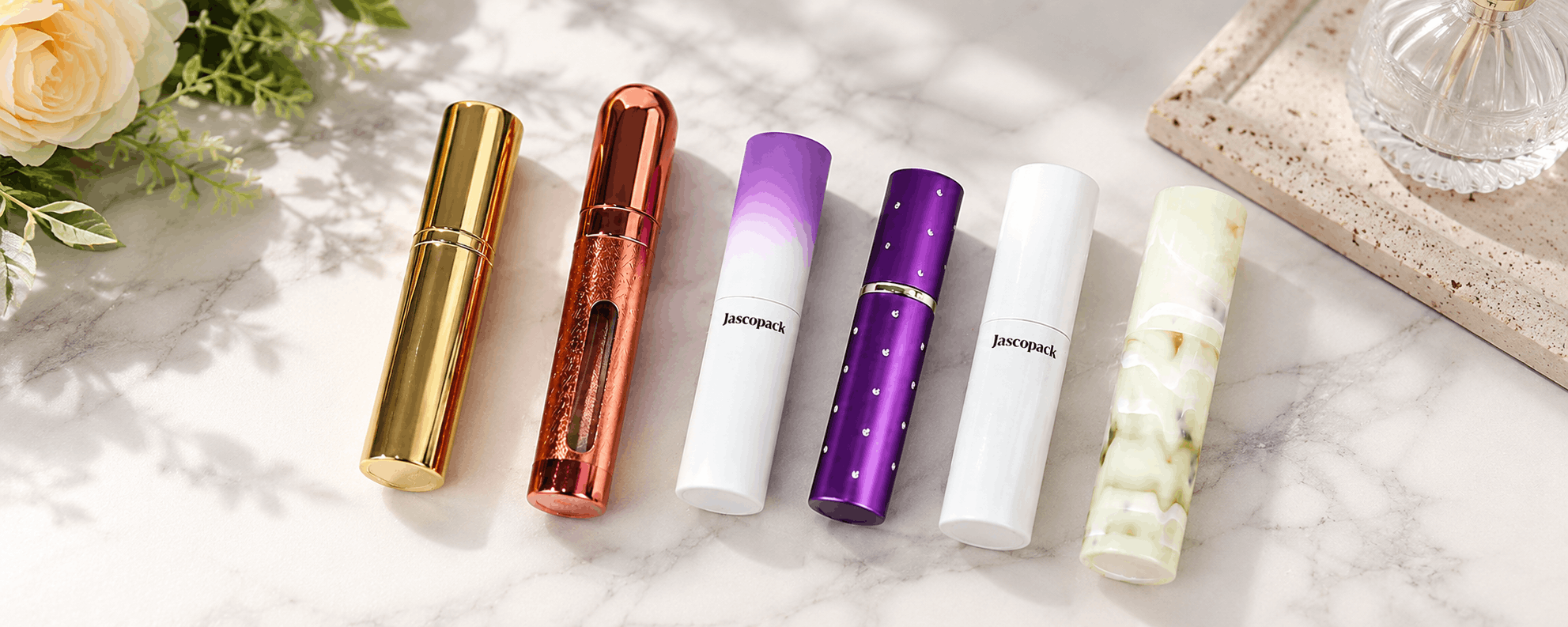
Plastic bottle caps: Plastic caps give you plenty of freedom with shape and finish. They’re a great fit for large production volumes because they keep costs in check and are straightforward to mold.
Aluminum bottle cap: Aluminum caps are light and have that shiny metallic look, which gives the bottle a clean, contemporary feel right away.
Zinc alloy bottle cap: Zinc alloy caps provide a heavier hand feel compared with lightweight materials. Because of their solid texture and premium appearance, they are frequently used for luxury perfume collections and high-end packaging designs.
Wooden bottle cap: Wooden caps bring natural grain lines. Brands that want to stress natural ingredients or showcase their handmade values often pick wood.
Common Perfume Cap Structures
Standard Perfume Caps
Standard perfume caps protect the actuator and reduce dust accumulation on the nozzle caused by prolonged exposure.
Magnetic Perfume Caps
Magnetic caps feel really nice when they snap shut, it’s that smooth, positive click that users love. But they’re tricky to make well: you have to place the magnets perfectly and get the force just right, or it won’t work properly.
Perfume Bottle Neck Structure: Connection and Sealing Performance
Connection Mechanisms
The crimping structure is a widely used structure in perfume spray packaging. It uses a special crimping machine to fix the spray pump at the bottle mouth and forms a seal with a sealing gasket.
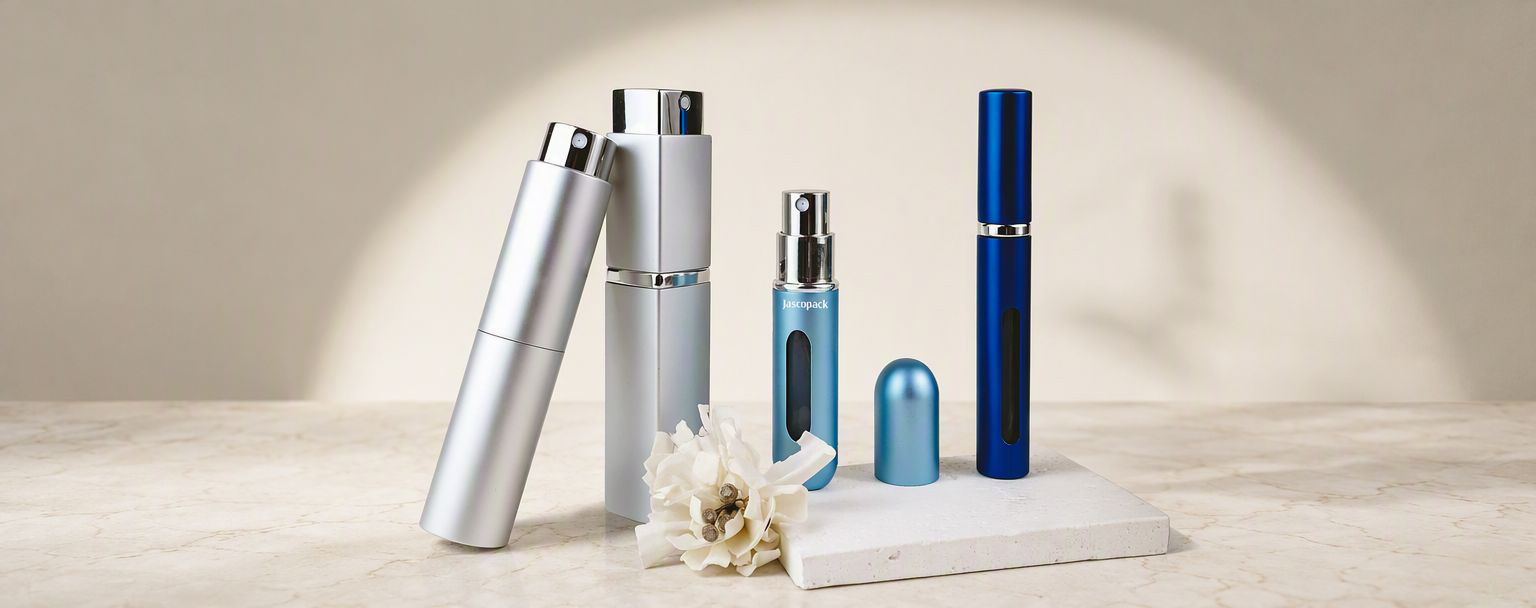
Screw‑neck bottles use simple threads to hold the sprayer in place. That means you can unscrew it easily, which is why you see this design a lot on refillable perfumes.
Sealing Structure
A sealing gasket is placed between the spray pump and bottle neck to improve sealing performance and reduce the risk of leakage during filling, transportation, and storage.
Spray System: The Key Factor Behind Spray Performance
Spray System Components
The actuator is the part pressed to activate the spray system. Its design affects the pressing feel, appearance, and how well the spray components match with the cap structure.
The nozzle has a huge say in how the perfume turns into mist. It has to be perfectly paired with the pump to keep the droplet size steady and the spray pattern even, spray after spray.
The dip tube transfers fragrance from the bottle to the spray pump. Its length, diameter, and cut design need to match the bottle structure to maintain stable liquid flow. Its length, diameter, and cut style affect suction efficiency and spray stability. If it is too short, it will affect the normal liquid absorption when the liquid level is low. If it is too long or bent, it may affect the liquid absorption efficiency.
Special Structure: Bulb Atomizer
Bulb atomizers create spray pressure by squeezing the rubber bulb manually. This classic structure offers a different interaction experience and is often seen in vintage, retro, or artistic fragrance packaging designs.
You also have to test whether the bulb stays springy, whether it seals well, and whether the perfume evaporates too quickly through it.
Spray Pump
The spray pump is the heart of the spray system. It draws liquid from the bottle through the dip tube into the pump body, builds pressure upon actuation to dispense a metered dose as a fine mist, and automatically returns to its original position after use.
Most standard pumps put out about 0.05 to 0.12 ml per squirt, but that number can change quite a bit based on the pump’s inner workings, the bottle shape, and the kind of spray experience you’re aiming for.
Bottle Body: An Important Element of Brand Identity
Bottle material determines the basic texture of the packaging, while the shape helps communicate the brand’s visual identity.
Common Materials and Applications
| Material Type | Characteristics | Brand Positioning |
| Glass Perfume Bottles | High transparency, excellent chemical resistance, premium look and feel | Luxury perfumes, niche fragrances, mass retail fragrance market |
| Aluminum Perfume Bottles | Lightweight, excellent light protection, portable design | Travel perfumes, functional fragrance brands |
| Plastic Perfume Bottles | Highly customizable, flexible designs in colors and shapes | Youth-oriented brands, fast-fashion fragrances, sample collections |
Common Bottle Shape Designs
| Bottle Shape Type | Design Characteristics | Brand Visual Style | Target Market |
| Square Perfume Bottles | Strong lines, structured and balanced shape | Premium, professional, modern | Modern-style brands, high-end fragrance brands |
| Round Perfume Bottles | Soft curves, balanced visual appearance | Elegant, classic, approachable | Women’s fragrances, mass retail fragrance market |
| Triangle Perfume Bottles | Unique silhouette, high visual recognition | Individualistic, artistic, avant-garde | Niche fragrances, designer fragrance brands |
These bottle shapes are widely used in perfume packaging projects. When developing a new design, brands usually review the bottle material, color, surface treatment, and market positioning together.
Bottle Base: Stability Design
The base provides support for the bottle structure. Its thickness, shape, and overall proportion can affect both stability and the visual quality of the finished package.
A thick-base design increases the bottle’s perceived weight and improves stability when displayed or placed on a surface.
Some perfume bottles come with a frosted or textured base, it’s not only a design detail; it also gives you a better grip and feels nicer in your hand.
How Do Brands Choose a Perfume Bottle That Suits Their Positioning?
Perfume bottles are not only containers for perfume, but also part of the brand image presentation. Different brands may focus on different details such as bottle shape, material, color and process to create a packaging style that is easy for consumers to recognize.
High-End Perfume Brands
If you’re a luxury brand, you can take a glass bottle and add electroplating or a gradient spray finish that gives it a richer feel and more visual depth. Toss in a metal cap or an unusual surface texture, and suddenly the bottle feels more premium and more like something people would want to keep on their vanity.
Minimalist Brands
Minimalist perfume packaging usually focuses on clean shapes, simple structures, and balanced colors. Transparent finishes, low-saturation tones, and simple caps allow the bottle design itself to become the main visual element.

Eco-friendly Brands
If going green is high on your list, then when you pick a perfume bottle, think about whether the materials can be recycled and whether the design lets people reuse it. These days, brands are turning to recyclable materials, inner refills you can swap out, and fully refillable bottles as the main ways to cut waste.
Travel Perfume Brands
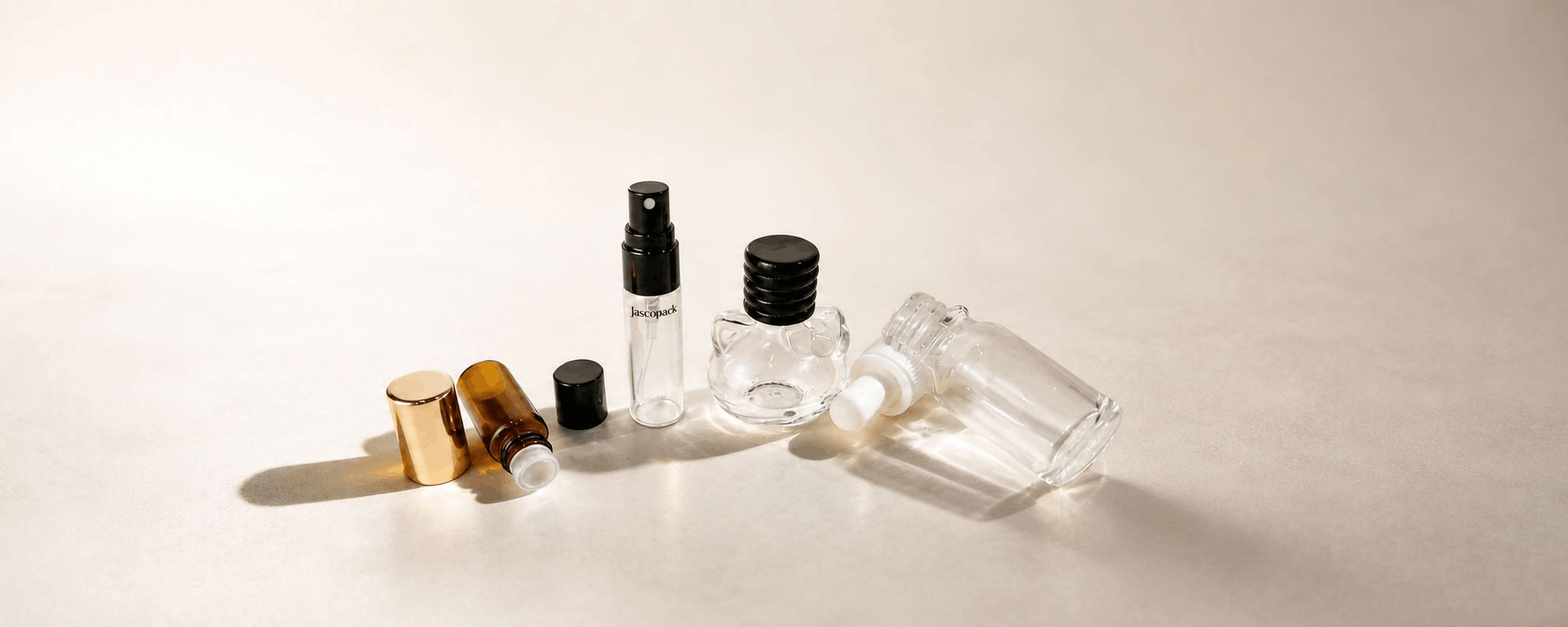
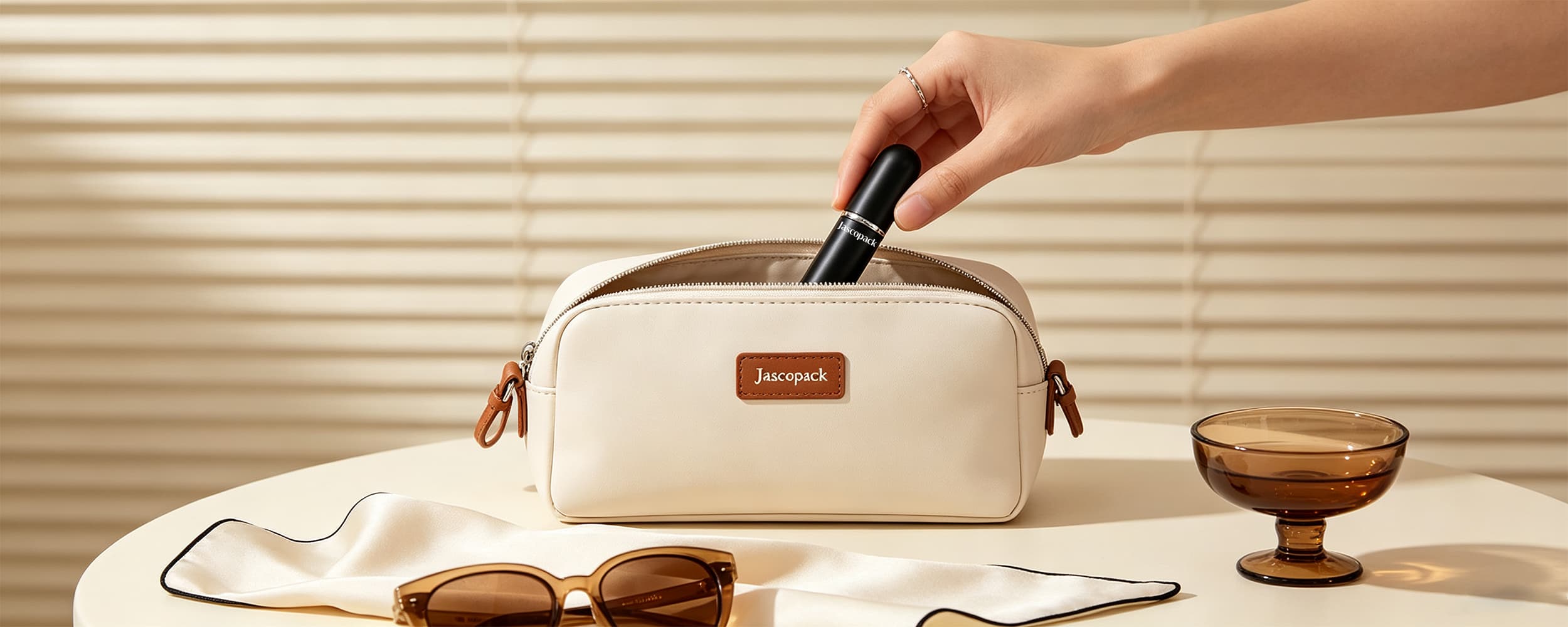
Travel perfume products usually focus on compact size and reliable sealing performance. Small bottles such as 2–5ml sample vials or 5–15ml travel atomizers are commonly used for portable fragrance solutions.
How to Choose the Right Perfume Bottle Packaging Supplier?
A pretty sample is not enough. The real test of a supplier is whether they can scale up, keep every batch identical, handle unusual customization requests, and stay reliable month after month, year after year. Miss any of those, and your development schedule or production line will suffer.
OEM/ODM Customization Capabilities
Good OEM/ODM partners do more than process orders. They step in early—helping refine bottle shapes, making molds, pairing the pump with the neck design, and running tests to see if the sprayer works with your actual fragrance. They guide you from the first sketch right through to finished bottles ready for filling.
Diverse Finishing and Structural Customization
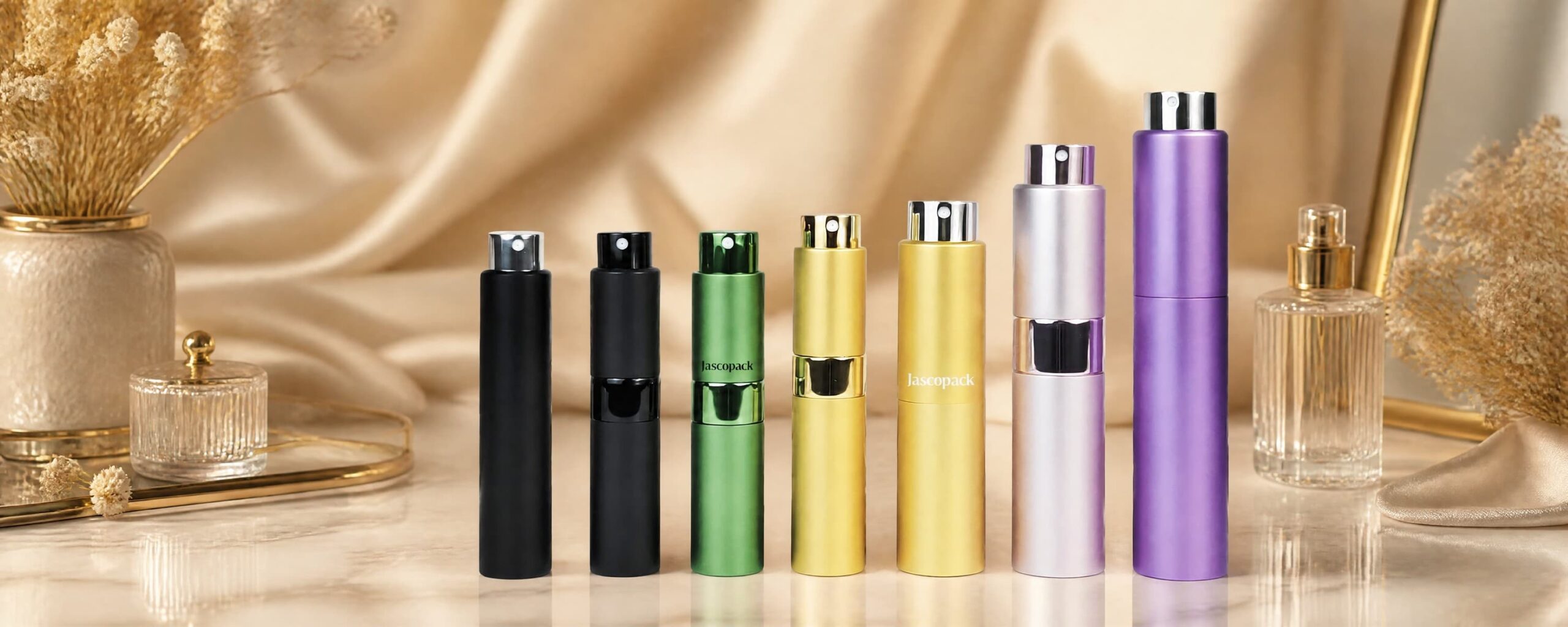
Surface work matters just as much. A capable supplier should be comfortable with spraying, plating, hot stamping—whatever finish you need. They should also be able to design custom neck openings and spray components that are built for your product, not just pulled from a standard catalog. That kind of flexibility gives you real creative room.
Quality Inspection Standards
Quality control is the foundation. Serious suppliers check everything at every stage—raw materials, production, final assembly. They test for chemical compatibility with your fragrance, leaks, fit tolerances, spray consistency over many pumps, coating durability, drop resistance, and dimensional accuracy.
Conclusion
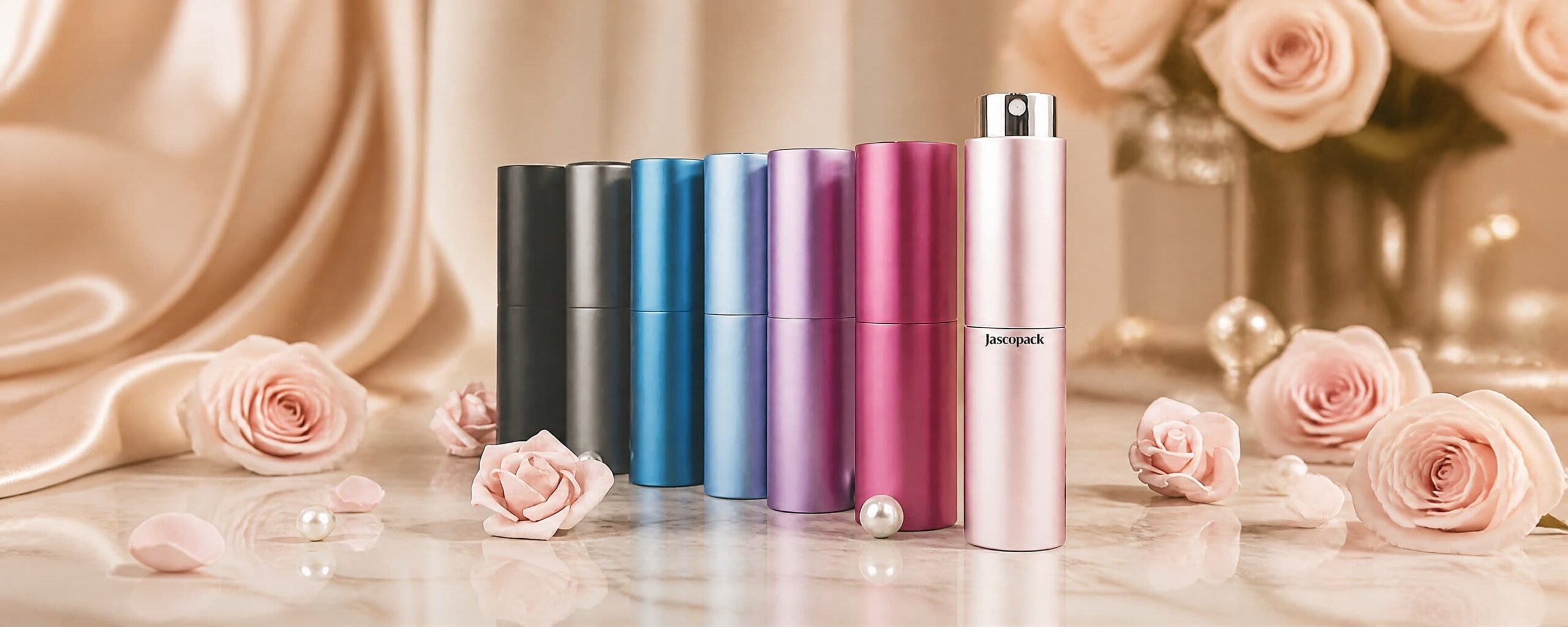
Choosing perfume packaging is usually a balance between visual design, product requirements, and production reliability. Leveraging its professional OEM/ODM capabilities and a stable supply chain, Jascopack provides customized packaging solutions for your perfume brand.
FAQ
Which material is best for perfume bottles?
Different materials have different advantages. Glass is widely used for traditional perfume packaging, aluminum works well for lightweight portable products, and plastic is commonly selected for samples or large-volume projects.
Are refillable perfume bottles a better choice?
Refillable perfume bottles are suitable for brands developing refill systems or encouraging repeated use. The final performance depends on the bottle structure, refill method, material compatibility, and how consumers use the product.
Can perfume sprayers be customized separately?
Yes. You can choose the color, material, spray pattern, press feel, and surface finish—plus pick the pump and nozzle that suit your bottle.