
Choosing an essential oil bottle is rarely only about appearance. For brands, the bottle needs to work well with the formula, stay properly sealed during storage, and handle the conditions of international shipping.
Below, we’ll start with common materials like glass and plastic to help you find the most suitable packaging solutions.
What Factors Should Be Considered When Choosing an Essential Oil Bottle?
Sealing and Leak-Proof Performance
Essential oils contain a variety of volatile fragrance components, so their packaging must be highly airtight. If the bottle opening is not properly sealed, problems such as evaporation and leakage may occur during long-term storage or transportation.
Formulation and Material Compatibility
Different components in essential oils may react with packaging materials. Therefore, it is not enough to look only at the bottle material; you must also consider the essential oil’s specific formula and concentration.
Light Protection and Storage Requirements
Some essential oils are sensitive to light, and prolonged exposure to light may affect the product’s condition. Therefore, the actual storage environment of the essential oils must also be considered.
Which Is More Suitable for Essential Oil Products: Glass Bottles or Plastic Bottles?
Glass Bottle
Advantage:
Glass has good chemical stability and certain barrier properties. For essential oil products that need to be stored for a long time, glass is a common choice.
Shortcoming:
Glass bottles are heavy, so care must be taken to prevent breakage during transportation.
Plastic Bottles
Advantage:
Plastic bottles are lightweight and more resistant to impact, which helps reduce breakage during shipping and lowers overall transportation weight.
Shortcoming:
Not all plastics are suitable for storing essential oils; you need to conduct compatibility tests on the materials based on the actual essential oil formula.
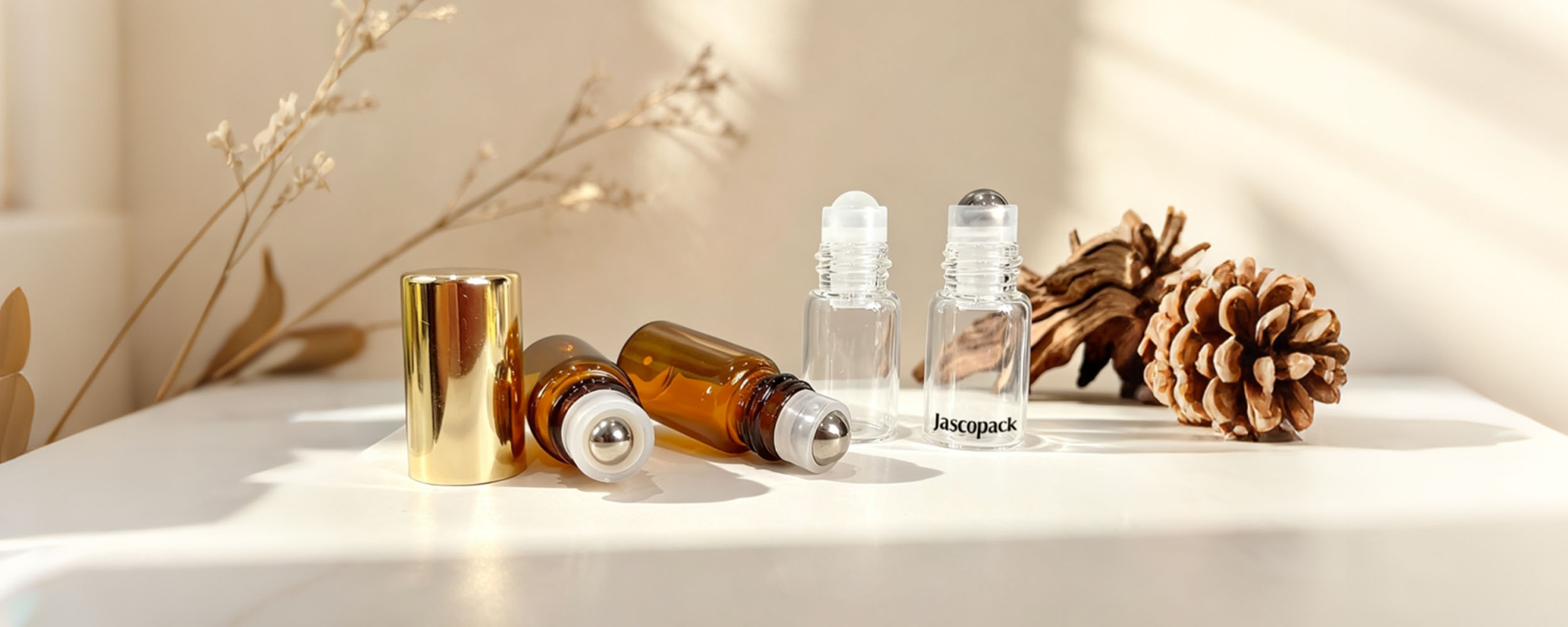
What’s the Difference Between Amber Glass Bottles and Clear Glass Bottles?
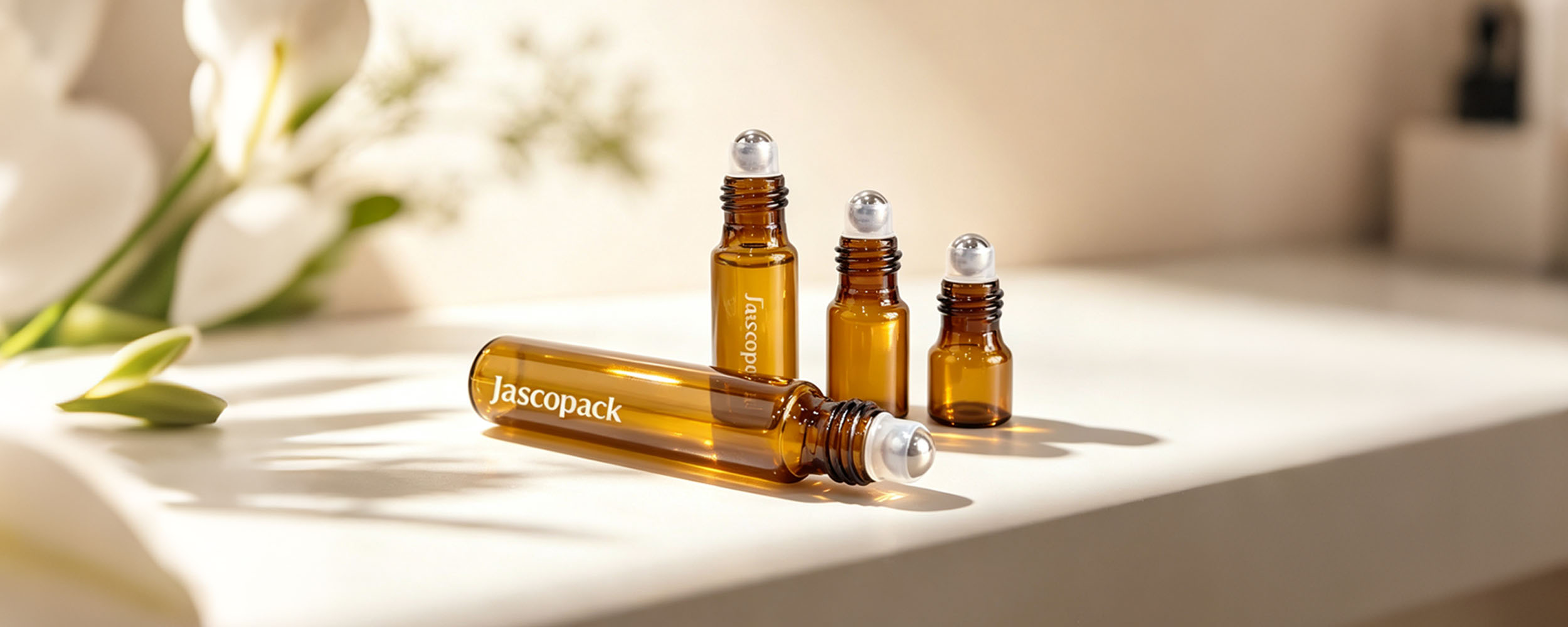
Amber Glass Bottle
Dark-colored glass, like amber, can protect essential oils and reduce the effects of UV radiation. Besides its functional benefits, the amber color also easily evokes associations of natural, professional essential oil products in the minds of consumers.
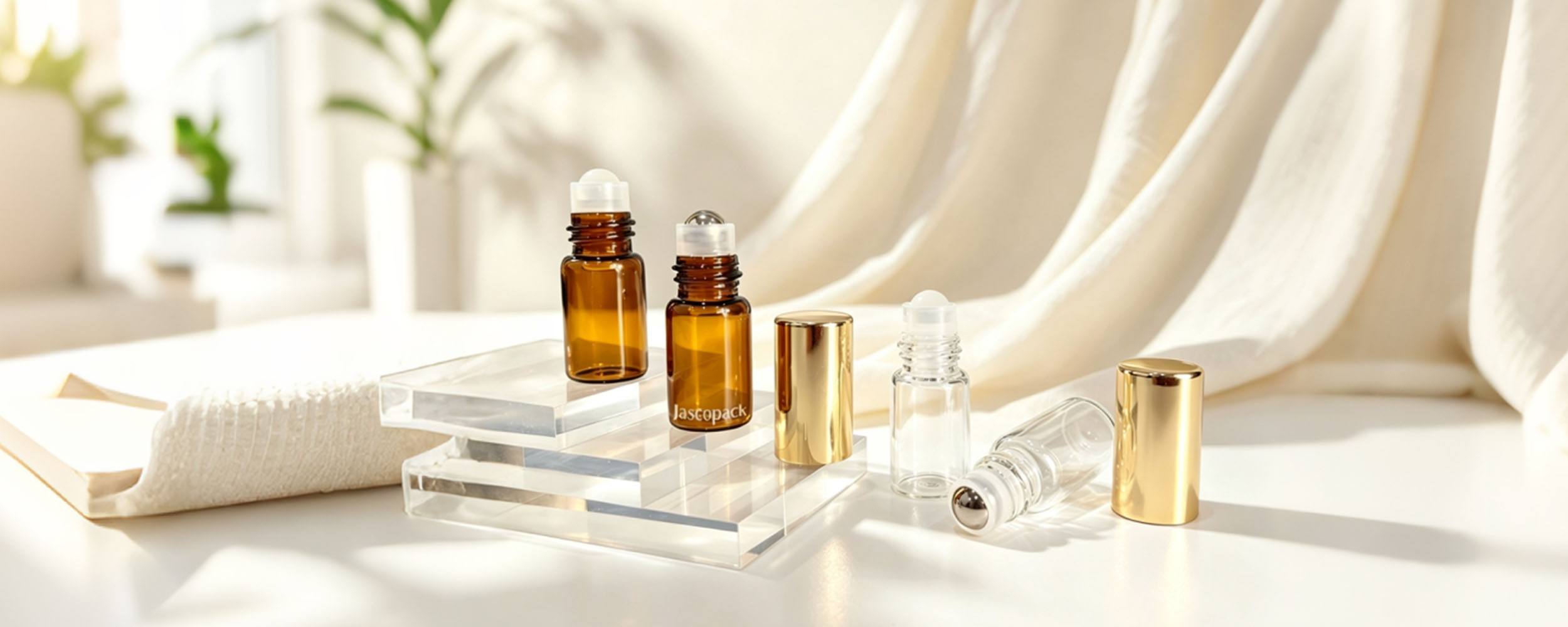
Clear Glass Bottle
The biggest advantage of transparent glass bottles is that you can directly see the color of the essential oil inside, which is better for brand display. If the formula is sensitive to light, you need to first confirm whether a transparent glass bottle is suitable.
Do Essential Oils React with Plastic Bottles?
PET: PET has high transparency, making the bottle clearer, and it is lightweight, making it widely used in cosmetic packaging.
HDPE: HDPE bottles offer good strength, impact resistance, and chemical stability. However, its bottles are generally opaque, so it is not as suitable as PET for displaying the color of essential oils.
PP: PP has good chemical and heat resistance and can come into contact with essential oils. In essential oil packaging, PP is often used in bottle caps, spray pumps, and other components.
Quick Comparison Table
Material | Transparency | Main features | Material Compatibility of Essential Oils |
| PET | high | Transparent, lightweight, and provides excellent display effect | Testing is required based on the specific essential oil formula. |
| HDPE | Opaque or translucent | Impact resistance and chemical resistance. | It generally has good tolerance, but compatibility testing is still recommended. |
| Glass | Can be transparent or dark | It has good chemical stability and barrier properties. | It generally has good stability, but other components such as the bottle cap and inner stopper still need to be considered. |
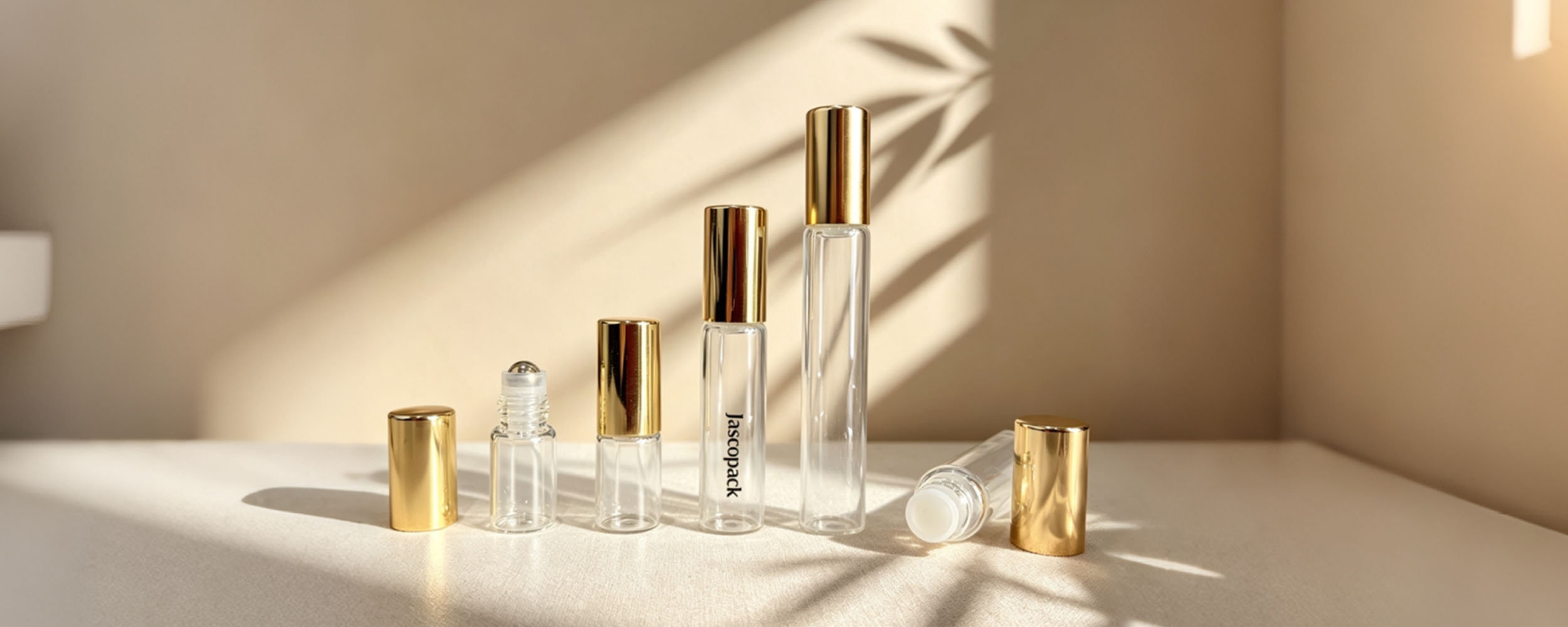
Why Can’t You Just Look at the Material of the Bottle When Choosing an Essential Oil Bottle?
When choosing an essential oil bottle, the bottle material is only one factor to consider. Other components may also come into direct contact with the essential oil, affecting the product’s sealing performance.
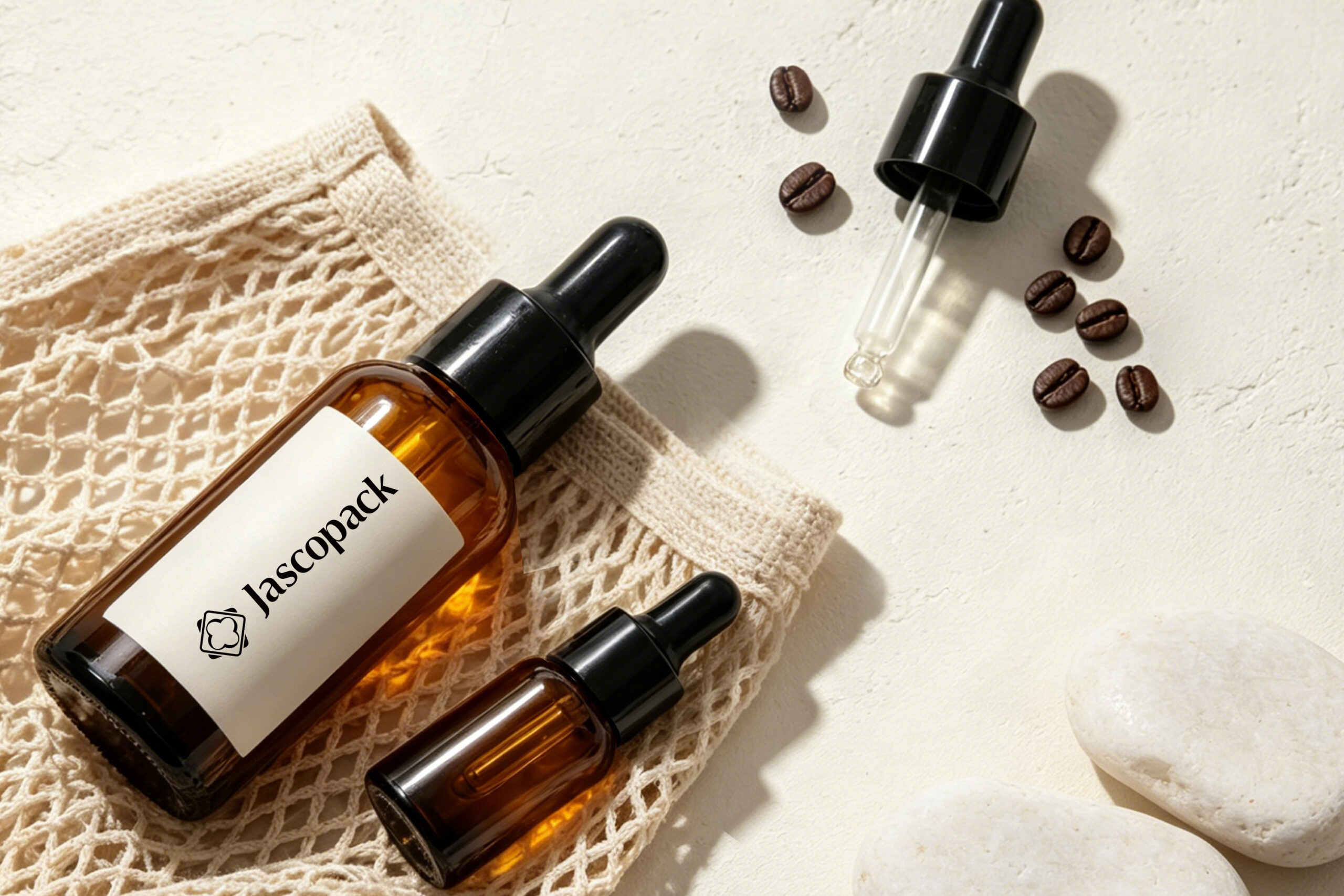
Dropper Bottle
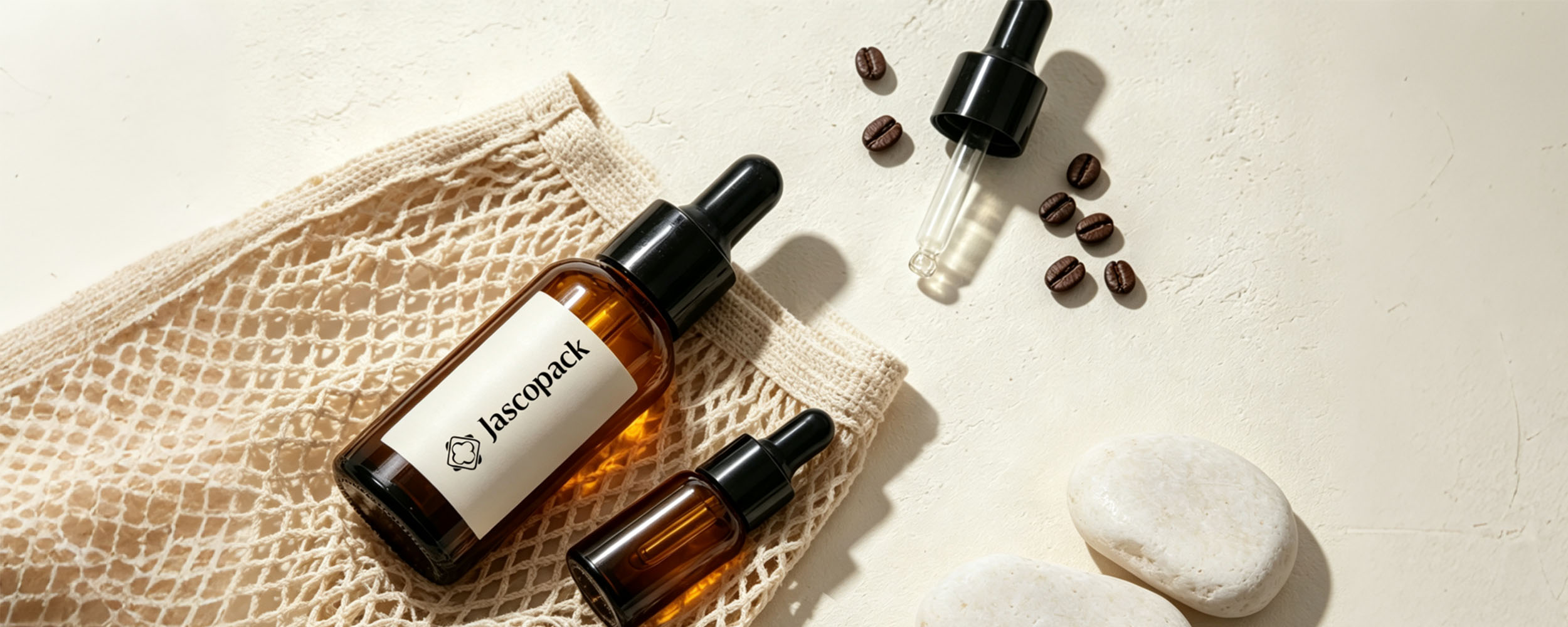
Dropper bottles typically consist of a bottle body, dropper, rubber head, dropper cap, and sealing element, and are well-suited for essential oil products where the dosage needs to be controlled.
When choosing this type of packaging, the bottle is only one part. The dropper and seal will also come into contact with the essential oil, so the durability of the material and whether it will change after long-term use need to be considered as well.


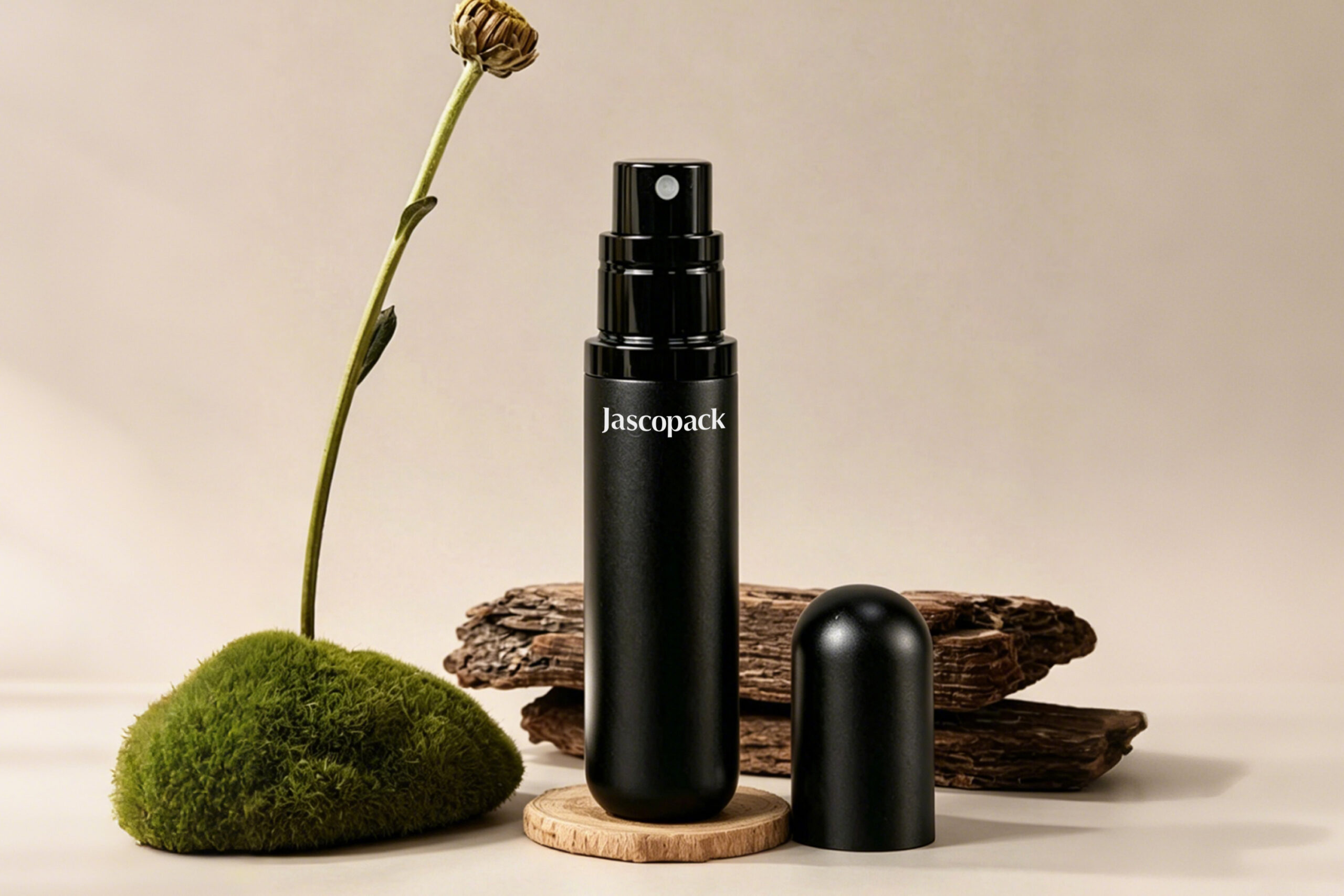
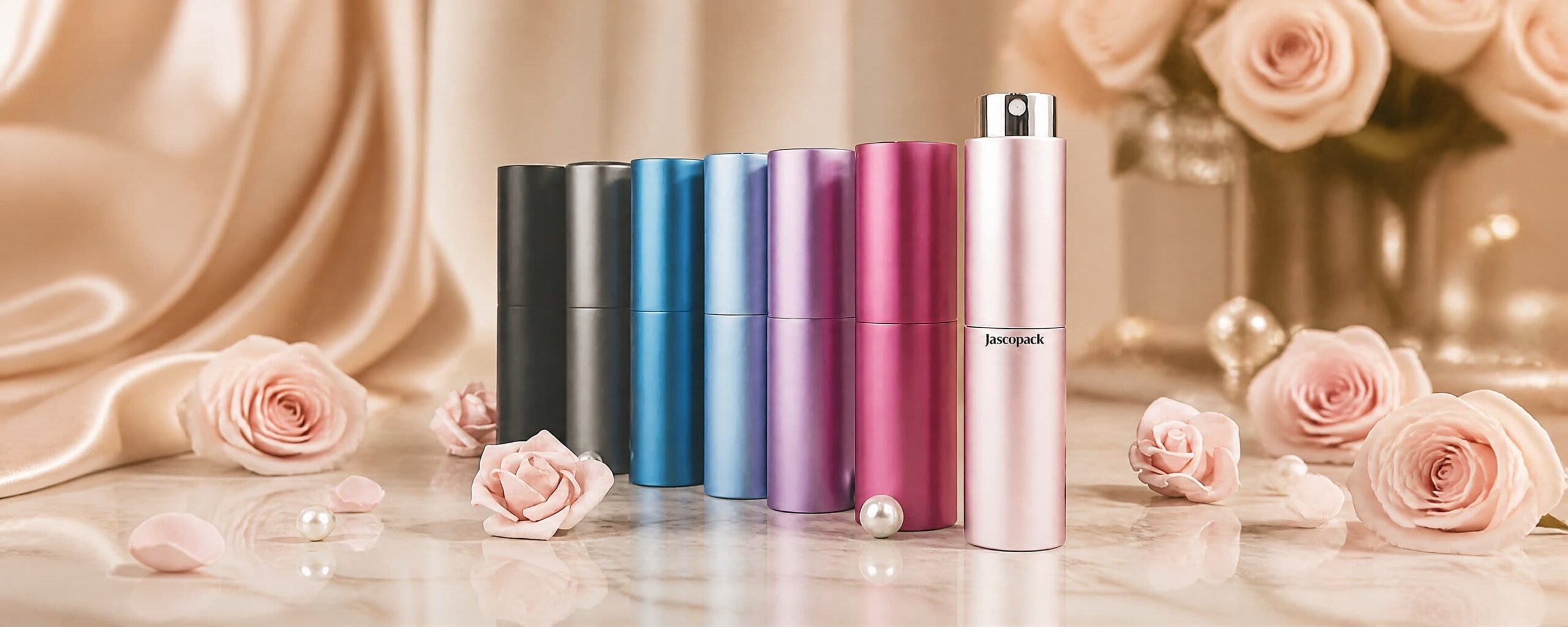
Spray Bottle
A spray bottle consists of a bottle body, spray pump, straw, nozzle, and cap, and is suitable for essential oil sprays or fragrance products that require spraying.
The spray effect is greatly influenced by the choice of spray pump. Different essential oil viscosities, formulations, and internal structures of the spray pump will result in different spray effects. An unsuitable pump may lead to uneven spraying, insufficient spraying, clogging, or leakage after a period of use.
How Should Brands Choose the Right Essential Oil Bottles?
Choose According to Essential Oil Formula
The formula should always come first. A bottle material that performs well with one essential oil may not be the right choice for another formula. For long-term contact products, compatibility testing with the actual formulation is the safest way to confirm performance.
Select According to Usage Method
For products requiring controlled dosage, dropper bottles are a good option. For products that need to be sprayed, spray bottles are a better choice. Different dispensing methods have different requirements for the bottle opening, dropper, or spray pump.
Choose Based on Product Positioning
If your brand wants to emphasize the transparency and weight of glass, glass bottles are generally easier to achieve the desired packaging effect. If durability and transportability are more important, PET or HDPE materials can also be considered.
Based on Storage and Transportation Selection
If essential oil bottles need to be stored for a long time or transported over long distances, factors such as light protection, airtight sealing, weight, and breakage resistance must also be considered. Glass bottles, in particular, require more thorough protection during transportation.
Conduct Testing Before Mass Production
After deciding on the bottle shape and material, it is better not to move directly into large-scale production. Instead, conduct compatibility, sealing, and dispensing performance tests using the actual formula first. Mass production should only begin after confirming that the packaging has no significant issues.
Conclusion
The right essential oil bottle needs to match the essential oil formula and usage method. If you are developing new essential oil products, Jascopack can provide dropper bottles, spray bottles, and other customized packaging solutions to meet your brand requirements.
FAQ
What size bottle should you choose for essential oils?
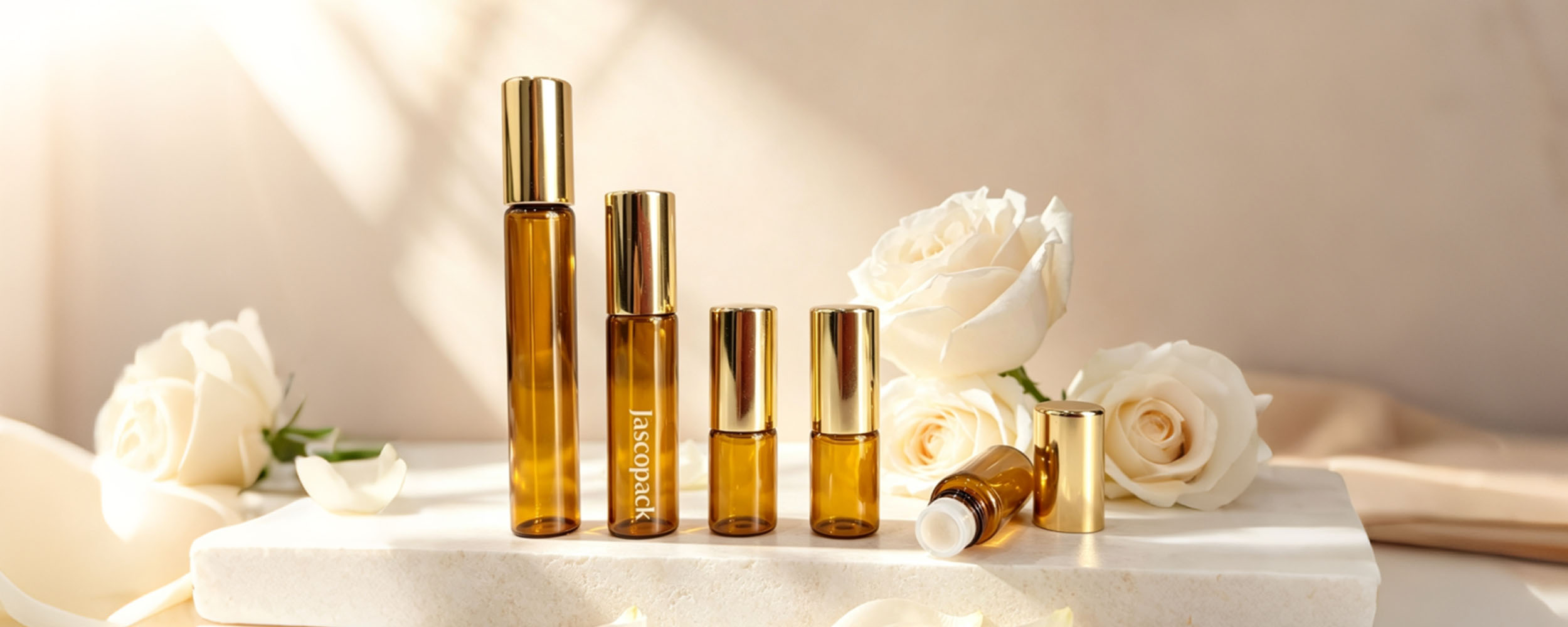
For essential oil products, 5ml, 10ml, 15ml, and 30ml are among the most commonly requested sizes. Smaller formats are often used for samples, travel products, or gift sets, while larger capacities are usually chosen for regular retail sales.
The specific size of the essential oil bottle you choose depends on your brand positioning and sales channels.
How long can essential oils be stored after being bottled?
There’s no fixed timeframe. Formula stability, bottle sealing, light protection, and storage conditions all play a role.
If a longer shelf life is required, the packaging should ideally be tested in advance with the actual formula.
Can essential oil bottles handle long-distance shipping?
If it’s a glass bottle, extra care is needed during transportation. Inner trays, cushioning materials, and outer boxes must all work together to prevent the bottles from colliding during transport. For bulk shipments, the packaging method can be adjusted according to the bottle type and the quantity per carton.
Can essential oil products be used in spray bottles?
Yes, but it depends on the specific formula. Essential oil sprays and fragrance products are more suitable for spray packaging. If the product is viscous or contains a lot of oil, you need to test whether the spray pump works properly first.