
If you are developing perfume products, you may ask: How long does a perfume bottle last? The answer is about 3 to 5 years, but the actual perfume bottle shelf life depends on various factors.
This article briefly explains the main factors affecting the life of perfume from three aspects: the perfume formula, the way of use, and the perfume packaging design.
Why Does Perfume Lose Its Fragrance?
Have you ever opened a bottle of perfume you’ve been using for a while and thought, “Wait a minute, this doesn’t smell the same as it used to”? This kind of change is quite common and is caused by the following factors.
Perfume Ingredients
Why do some perfumes last for years, while others lose their scent within a few months? This has to do with the ingredients in the perfume formula—the fragrance concentration, alcohol content, and ingredient quality. Some highly volatile perfume ingredients are more likely to gradually fade during storage.
Opened vs Unopened Status
An unopened perfume bottle can last for 3-5 years, and an opened perfume bottle can only last for 1-3 years.
Perfume bottles can better maintain durability when unopened. When the perfume bottle is opened, the air will slowly enter the bottle. Alcohol and essence will gradually oxidize after contacting the air.
The change may not be obvious at the beginning, but as time goes by, you will find that the top note becomes weaker and the overall level of aroma changes.
Environmental Factors
If your perfume products are stored under high temperatures, direct sunlight, or fluctuating environmental conditions, the evaporation rate of fragrance compounds will accelerate.
Key Factors Determining the Life Cycle of Perfume
The stability of a perfume is not the only important factor. How long a bottle actually lasts for a user also hinges on its volume, fragrance concentration, and frequency of use.
Perfume Bottle Volume
The volume of a perfume bottle is one of the most direct factors affecting the usage lifecycle, especially in wholesale perfume packaging and bulk fragrance production for brands and distributors.
Generally speaking, large-capacity perfume bottles can be used for a longer time under the same frequency of use; small-capacity perfume products, such as travel packaging or repackaging bottles, have less capacity and are more likely to be consumed quickly.
Different Types of Perfume
Comparison of Perfume Types and Usage Cycles
Type | Fragrance Concentration | Usage Characteristics | Impact on Usage Cycle |
| Eau de Parfum (EDP) | 15%–20% | Used in smaller amounts, longer-lasting scent | Lower usage frequency → longer product usage cycle |
| Eau de Toilette (EDT) | 5%–15% | More suitable for daily use, fresher scent profile | Moderate usage frequency → medium usage cycle |
| Eau de Cologne (EDC) | 2%–5% | Light and fresh, requires more frequent reapplication | Higher usage frequency → shorter usage cycle, faster consumption |
From this table, you can see that perfumes with higher fragrance concentration are typically used less frequently, resulting in a longer usage cycle; the lower the concentration of perfume, the shorter the scent retention time, the more frequently it needs to be re-sprayed, the faster the consumption rate will be, and the usage lifecycle will be shorter.
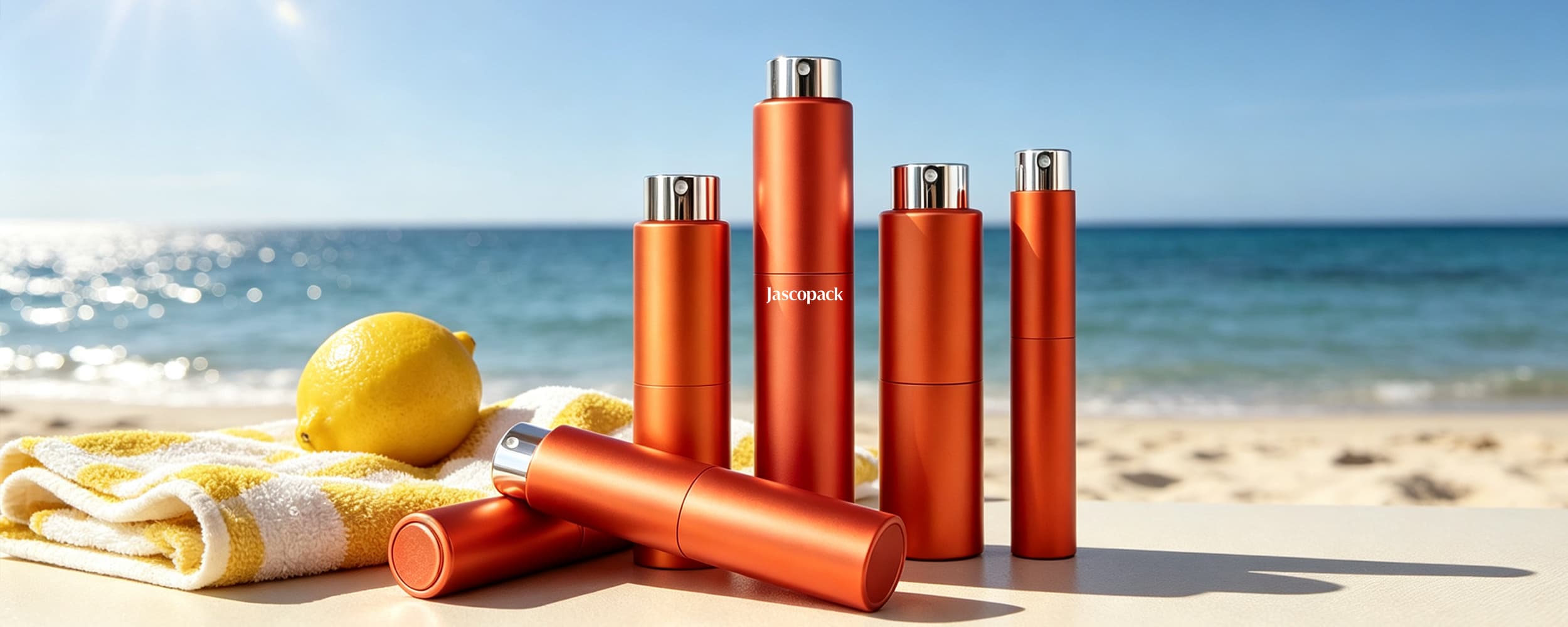
How Does Perfume Bottle Design Affect the Shelf Life?
Bottle Design
Spray bottles work with a pump mechanism — they’re only open for a split second when you spray, then seal right back up. That means minimal air exposure and slower oxidation.
Dropper bottles, on the other hand, need to be opened every single time you use them, which will expose perfume to the air, and it is easy to change the fragrance state over a long period of time.
Spray Pump
Comparison Table of Spray Pump Types and Shelf Life
Spray Pump Type | Usage Characteristics | Impact on Perfume Shelf Life Stability |
| Standard Spray Pump | Even atomization, smooth usage | Minimal impact on fragrance stability |
| High-Atomization Spray Pump | Finer mist, more premium user experience | Reduces air exposure, helps maintain fragrance stability |
| Plastic Spray Pump | Low cost, lightweight | May slightly accelerate evaporation or oxidation during long-term use |
Simply put, the tighter the seal and the more precise the pump, the more stable your perfume stays; it can make a real difference in how long the fragrance holds up.
Material Selection
Glass perfume bottle is widely used in high-end perfume bottle packaging. It does not react with the fragrance, so the scent remains unchanged. Even after sitting on the shelf for several months, there will be no noticeable change in the fragrance.
Plastic perfume bottle is lighter and cheaper, but over time, its durability is poor. More suitable for sample perfume packaging or short-cycle fragrance products.
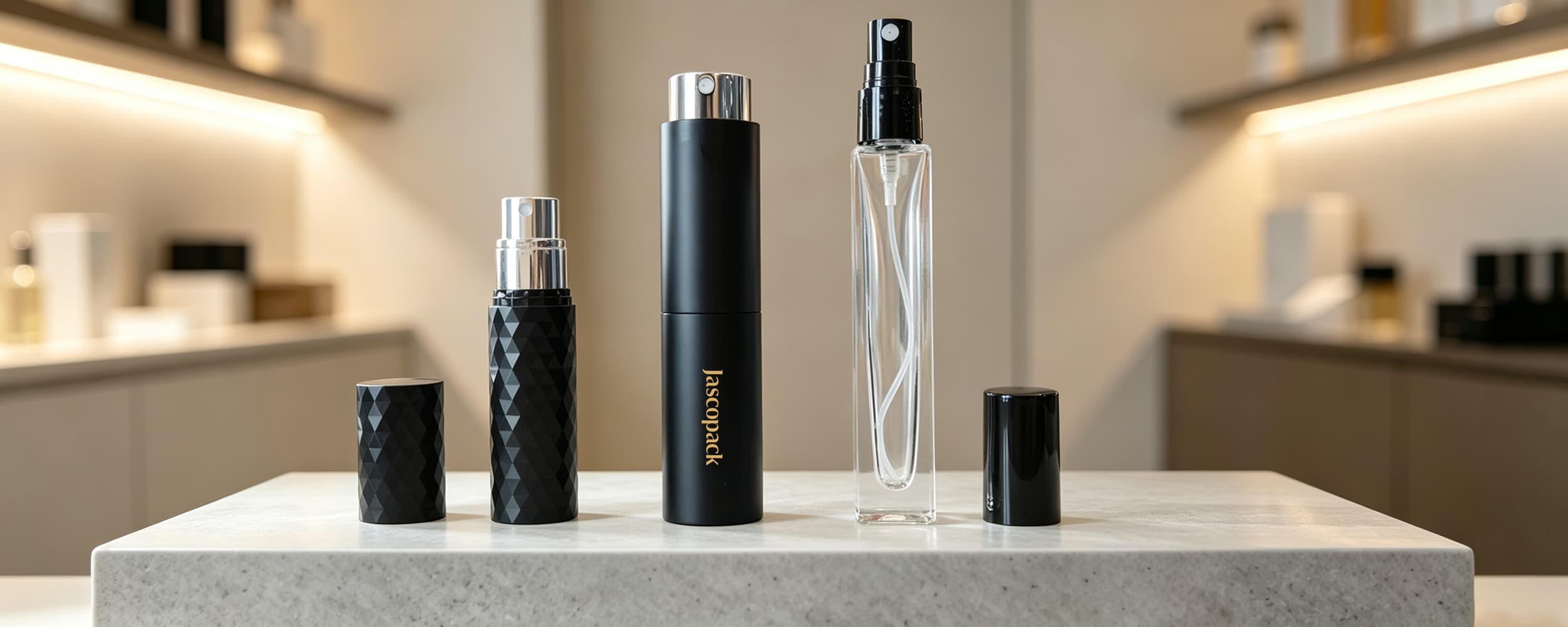
Aluminum perfume atomizer can effectively block ultraviolet rays and resist oxidation. It is an ideal choice for travel perfume spray packaging or outdoor use.
How to Judge Whether Perfume Has Expired?
Opened perfume bottles will gradually darken in color. If it starts as a clear or lightly colored liquid and slowly turns amber or even brown, then that’s the time you should pay attention to.
Expired perfume smells terrible. When the odor begins to deteriorate, you will feel a strong, metallic, or sour taste. Although the use of expired perfume will not cause too serious problems, it may irritate people with sensitive skin.
How Can Brands Extend the Service Life of Perfume Through Packaging?
From a brand perspective, these changes are not sudden occurrences, but rather the result of a gradual accumulation. The purpose of packaging design is to slow down the change speed of perfume as much as possible, so as to extend the service life of perfume.
Sealing System Design
If you want to know what really controls how fast a perfume evaporates, look at one place: the connection between the pump and the bottle neck. That’s where the seal lives — and that’s what determines how much air gets in.
You can focus on these core details, such as the precision of thread processing at the bottle neck, the fit between the spray pump and the bottle neck, and the stability of the internal sealing ring. The closer these structures fit together, the less contact between perfume and air, and the lower the evaporation rate of perfume.
Transportation and Storage Protection
In the actual transportation process, your perfume bottle will encounter vibration, temperature differences, and long-term stacking pressure. These external factors seem to have nothing to do with the perfume bottle, but they will slowly affect the stability of the bottle and change the pressure in the bottle.
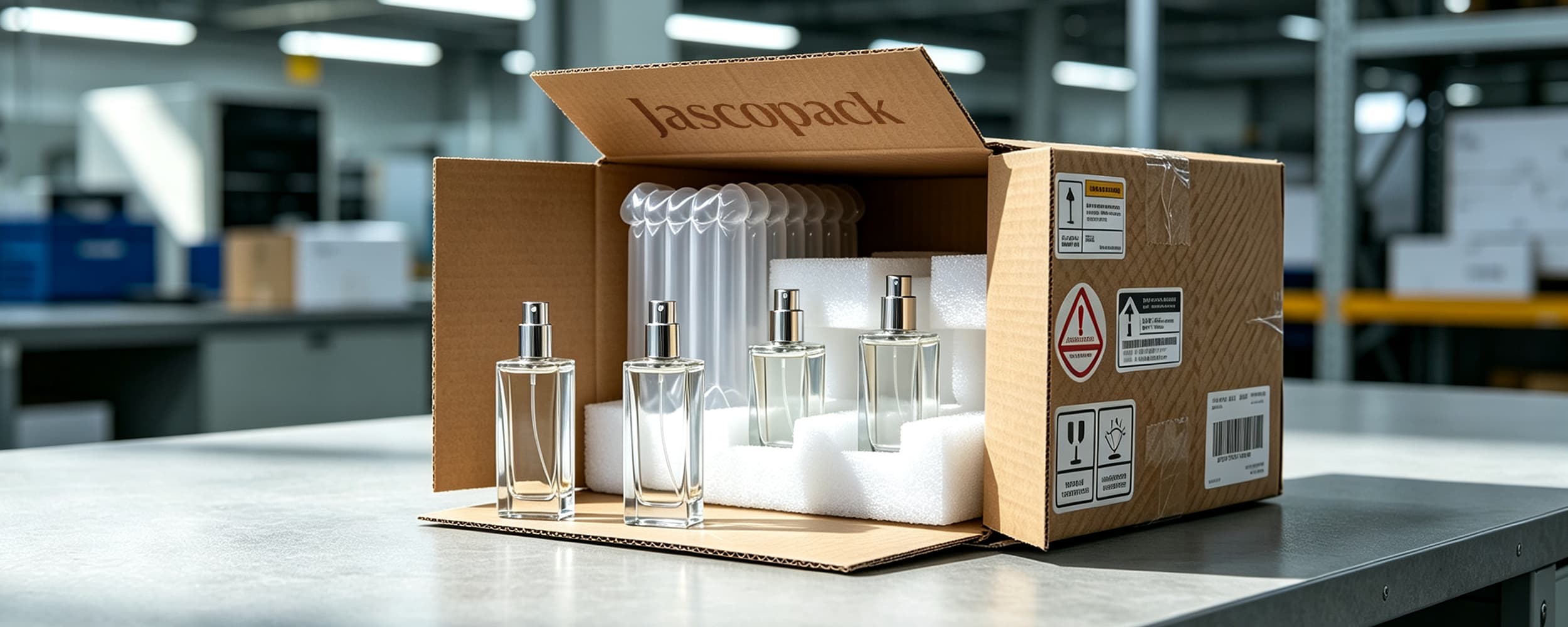
So, when transporting, you need to consider whether the overall packaging is suitable for long-distance export transportation. You can fix the perfume bottle body through the inner support structure to reduce the transport shaking; Or add cushioning materials, shading, and heat insulation packaging design to keep perfume away from high temperature and strong light environments.
Testing and Quality Control
By doing these simple tests, you can verify whether the perfume packaging will go through its service life under the real-use condition in advance.
Take the sealing test as an example: During the inspection, you should pay attention to whether the internal airtightness of the perfume bottle is maintained after sealing, and whether leakage occurs after long-term standing;
Take the spray pump life test as another example: During the testing, you need to simulate its spray performance after several thousand actuations, and pay attention to whether the spray is still fine, or whether there is jamming or leakage. These little details are essential for OEM perfume packaging quality control and batch consistency, and will impact the consumer’s overall experience with your brand.
As for the material compatibility test, it is used to confirm whether the material stability of the components and seals will be affected by the alcohol and fragrance oil components of perfume in long-term contact with the bottle body.
Conclusion
If you are developing perfume or looking for reliable perfume packaging solutions, Jascopack, as a professional cosmetics packaging manufacturer, provides customized solutions for perfume bottles.
FAQ
When I develop perfume products, how can I judge whether the packaging is really reliable?
It is recommended to pay attention not only to perfume bottles’ sample performance, but also to their production quality after mass production, the consistency of performance between batches, and the performance after going through shipping.
I’m concerned that differences in packaging between batches might affect product stability. How can I prevent this from happening?
Many brands will worry about this problem. Professional suppliers will control mold precision, standardize key parts, and cooperate with multiple quality inspection and spot checks to try to control fluctuations between people and batches, so as to keep different batches of perfume bottles consistent.
What is the minimum order quantity of wholesale perfume bottles?
It depends on what type of perfume bottle you choose and whether you want to make a customized choice. If the existing standard version is used directly, the minimum order quantity can be very flexible; But if it is OEM customization, it requires the development of molds and process design, and the minimum order quantity will be higher. We need to determine this based on the specific plan.