
Choosing a refillable perfume bottle requires more than simply selecting a bottle that can be opened again. This article looks at bottle neck structures, opening methods, and refill solutions to help your brand make better packaging decisions.
Understanding Different Perfume Bottle Opening Structures
Before considering a refillable design, brands need to understand how the bottle neck and spray pump are assembled. Not every perfume bottle is developed for repeated refilling.
An incorrect opening method can damage the bottle neck and may also affect spray pump performance.
Screw-Neck Spray Bottles
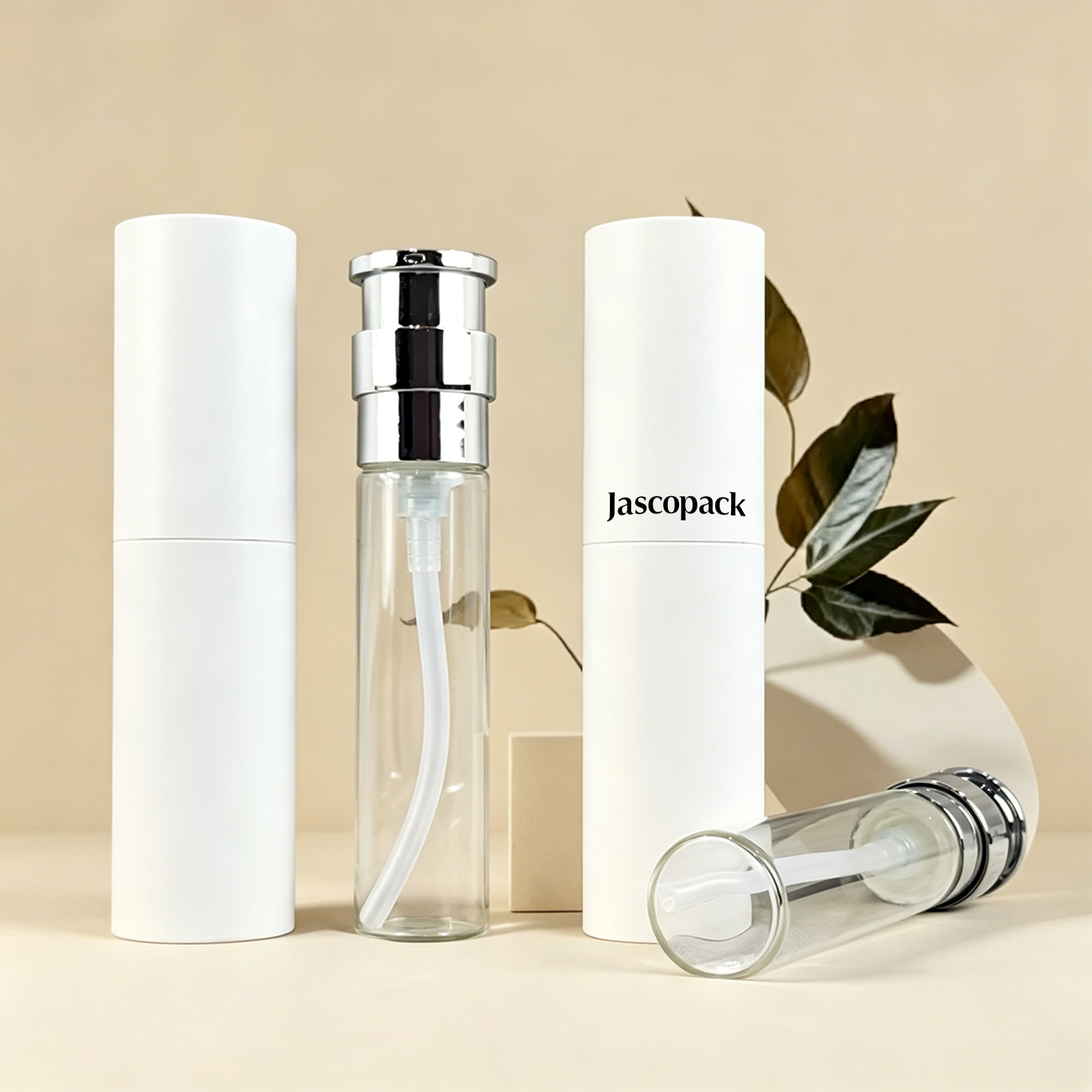
This type of spray bottle uses a threaded neck design. The spray pump is fixed by the screw connection, while the sealing gasket works with the structure to prevent leakage. It can be directly disassembled by rotating counterclockwise to facilitate subsequent refilling, and is often used for refillable perfume products.
Screw-neck perfume bottles are suitable for repeated use, but the refill life depends on the condition of the threads and sealing gasket. Frequent opening and closing may gradually cause wear.
Crimp-Neck Spray Bottles
For crimp-neck spray bottles, the pump is secured to the bottle neck by a metal ferrule during the crimping process. Once crimped, the ferrule keeps the spray pump firmly positioned and provides the sealing required for normal perfume use. Once assembled, crimp-neck bottles are difficult to open without professional equipment and are widely used for traditional and premium retail perfume packaging.
During factory rework or production adjustments, crimp-neck bottles can sometimes be removed with professional tools. For this reason, we do not suggest consumers opening crimped perfume bottles with household tools such as pliers or scissors.
Once a ferrule has been removed and deformed, it is generally not suitable for reuse because the original sealing condition may not be achieved after re-crimping.
Bottom-Fill Spray Bottles
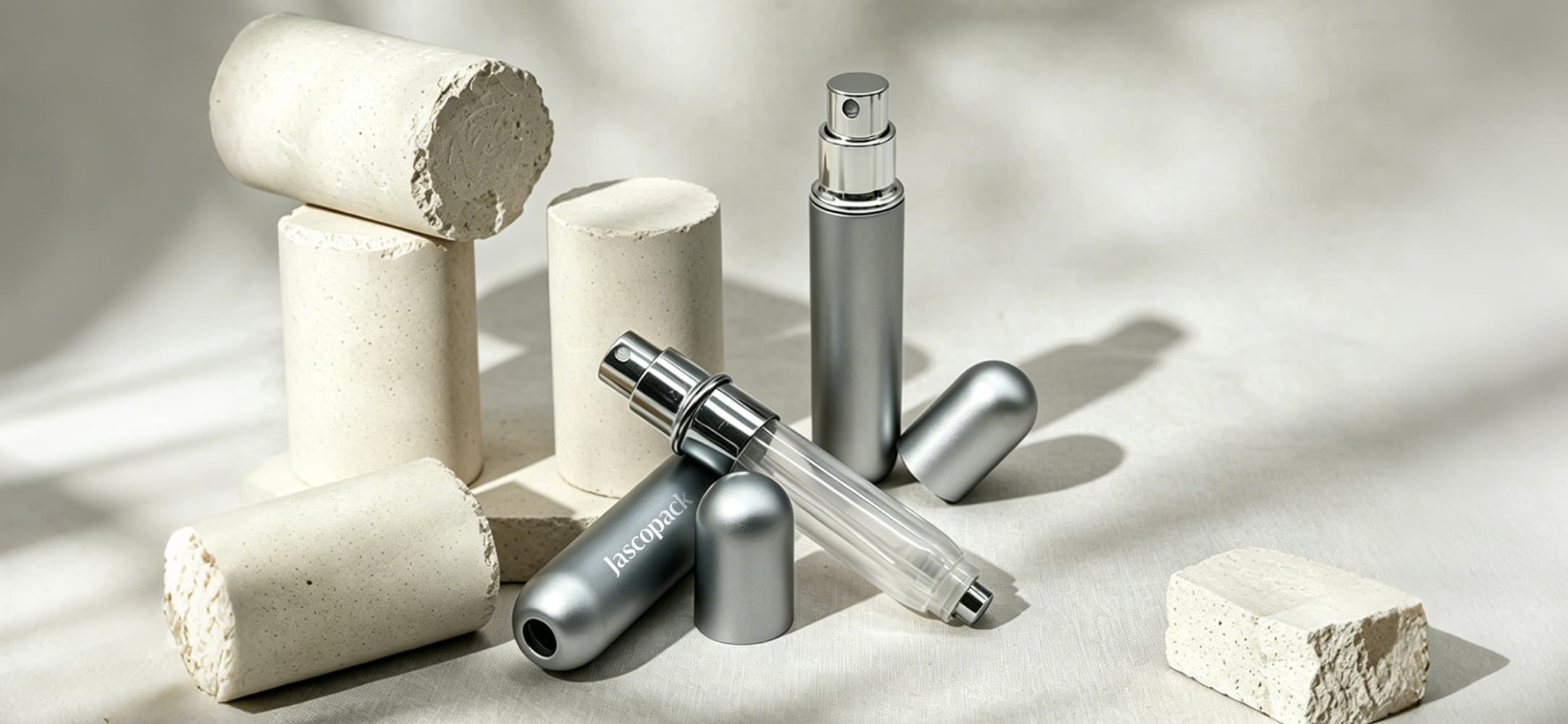
Bottom-fill travel atomizers use a different refill structure from standard spray bottles. Instead of removing the spray pump, users can refill the bottle through the valve at the bottom.
When refilling, the bottom valve connects with the spray stem of the original perfume bottle. Several presses are enough to transfer the fragrance into the travel atomizer, while keeping the liquid exposure time relatively short.
Roll-on Bottles
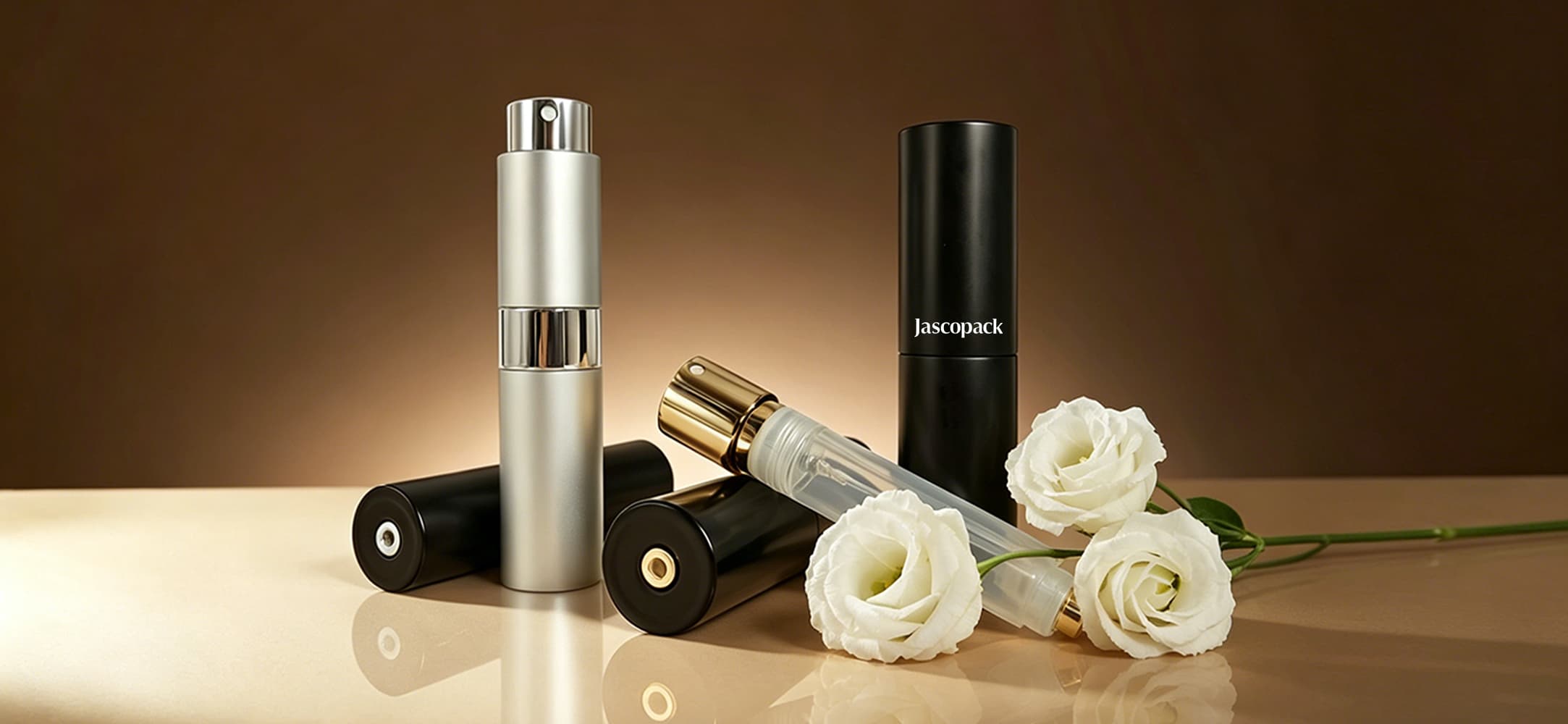
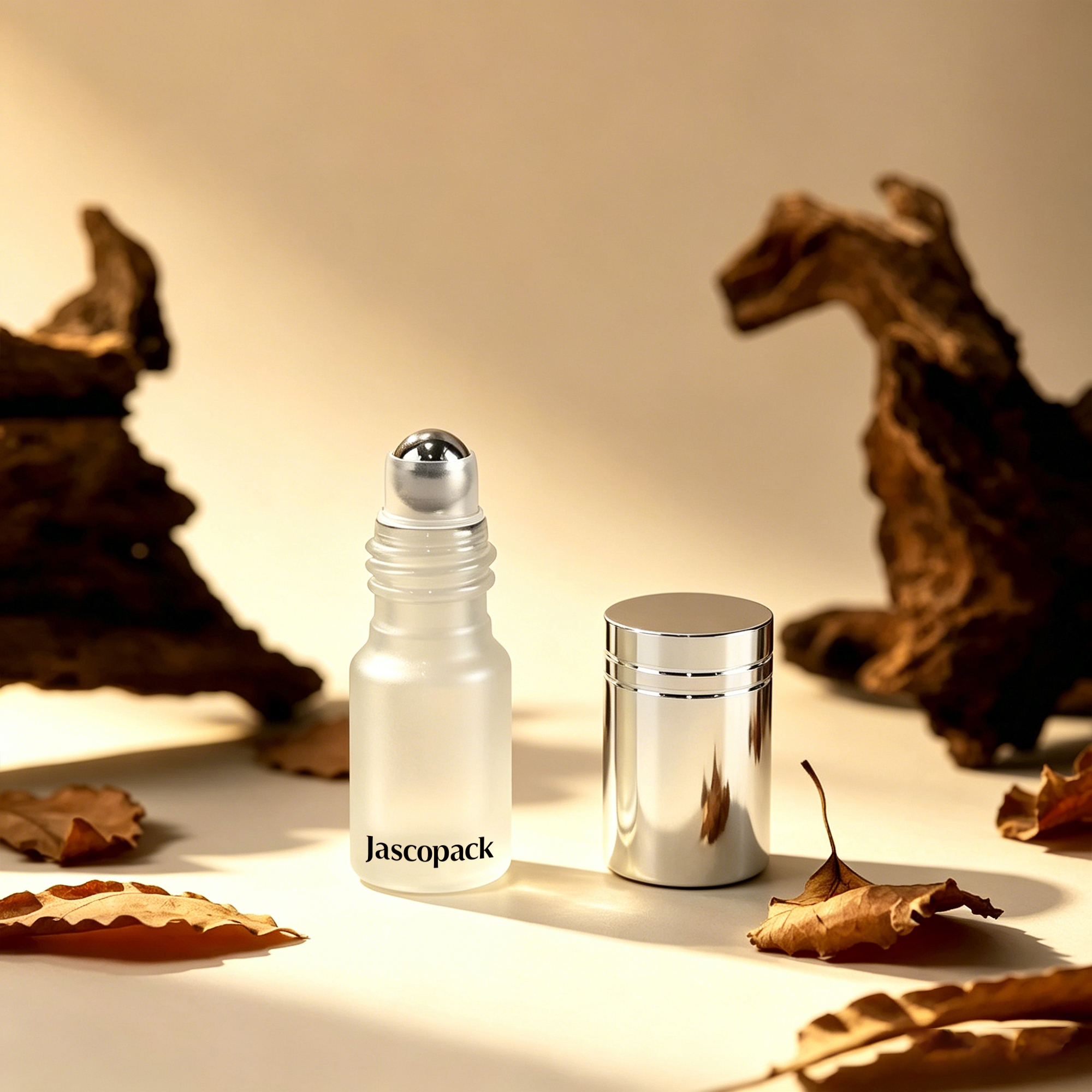
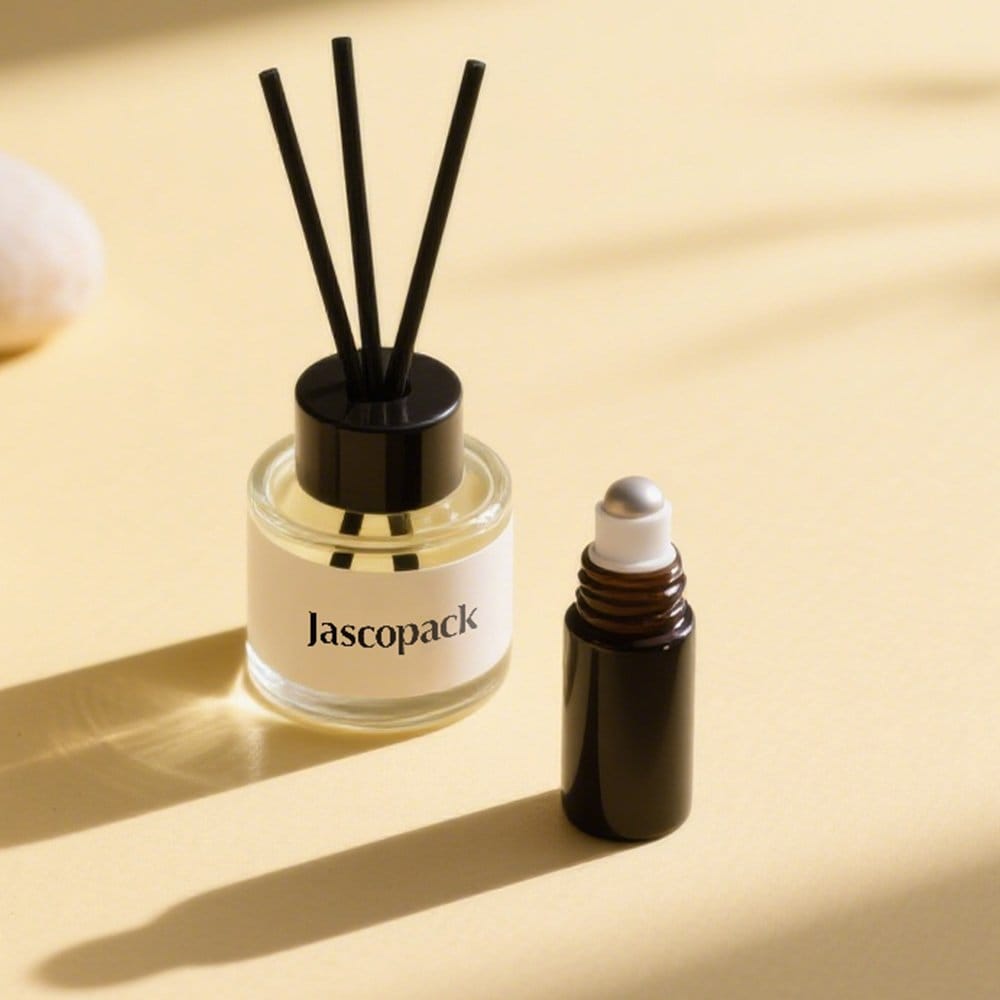
Roll-on bottles use a small roller ball at the opening to dispense fragrance evenly as the ball rolls across the skin. Some refillable roll-on bottles use a threaded structure, allowing the roller ball assembly to be removed for refilling. Other roll-on bottles use a press-fit roller ball housing, where repeated removal may affect the fitting accuracy and sealing performance between the housing and bottle neck.
Refilling perfume into a rollerball bottle can be challenging. It’s necessary to confirm the installation method of the rollerball assembly to determine if the bottle is suitable for repeated refilling.
Quick Reference Table
Perfume Bottle Types | Disassembly Method | Refill Compatibility | Brand Selection Recommendations |
| Screw-Neck Spray Bottles | Can be unscrewed and removed | Relatively suitable | Suitable for refillable products and products requiring repeated opening |
| Crimp-Neck Spray Bottles | Requires professional tools for disassembly | Usually not designed for consumers to refill by themselves | Suitable for traditional and premium retail perfumes |
| Bottom-Fill Spray Bottles | No need to remove the spray pump, refill from the bottom | Suitable for travel refilling | Suitable for travel atomizers, portable refillable fragrance products |
| Roll-on Bottles | Depends on the roller ball component design | Requires compatibility testing and confirmation | Suitable for perfume oils, essential oils, and portable fragrance products |
Preparation Before Refilling Perfume Bottle
Environmental Requirements
During actual production, we have found that many quality issues are not caused by the perfume bottle itself, but by contamination introduced during the filling process, such as dust entering the bottle, spray pump assembly, or other critical areas.
Therefore, filling operations should be carried out in a clean, well-ventilated, and temperature-controlled environment.
Before filling, the work surfaces and tools should be cleaned according to the requirements. If cleaning agents are used, they should be fully evaporated before bottles and fragrance are placed in the filling area to prevent residue contamination.

Tool Preparation
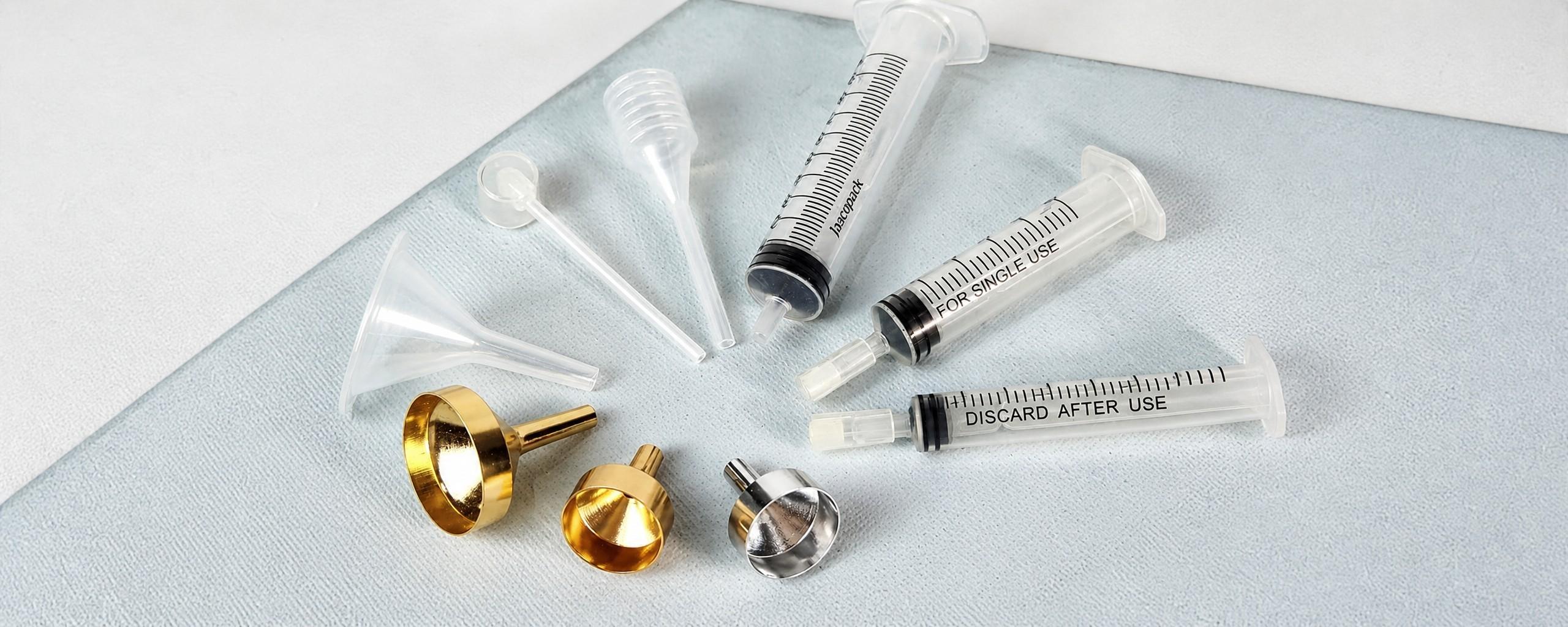
Manual Filling Equipment for Small-Batch Testing
Filling Dropper: suitable for filling small capacity samples or trial packs, with simple operation and limited filling efficiency.
Funnel: suitable for perfume bottles with large mouth size, which can prevent liquid splashing.
Filling Syringe: used for perfume bottles with narrow mouth, which can accurately control the filling amount.
Transfer Needle: used for precise subpackage from large capacity perfume bottle to small bottle, suitable for small batch customization or multi specification products.
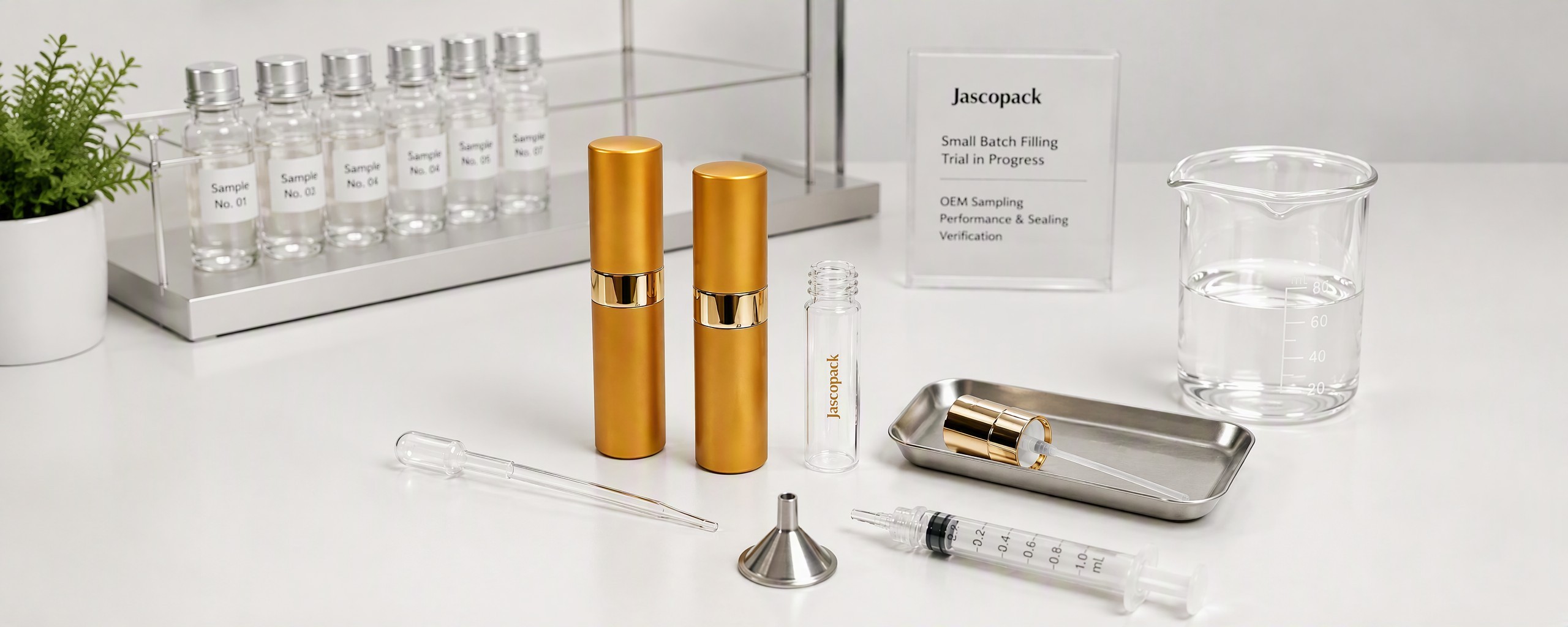
In the OEM proofing stage, we recommend that you first use small batch filling to verify the spray effect, rather than directly entering mass production. Because different perfume formulations may affect pump core, sealing materials and spray performance.
How to Refill Perfume Bottles?
Different brands may face different requirements during the filling process. Before selecting a filling method, factors such as order volume, bottle neck structure, and filling accuracy should be evaluated together.
Small-Batch Filling for OEM Testing
During the OEM sampling stage, brands should use small-batch filling trials to verify compatibility between the perfume bottle and fragrance formula, including spray performance and sealing performance.
Perfume Preparation
Store the perfume to be filled in a clean container that has been cleaned and meets the requirements to avoid violent shaking, reduce the generation of bubbles, and volatilization.
Using Filling Tools
If you are in the stage of small batch orders, you can use filling tools such as droppers, funnels, and syringes to complete the filling. When selecting filling tools, brands should consider factors such as bottle neck size, filling volume, and operating efficiency.
Precautions for operation: During filling, the liquid level should be controlled carefully to prevent overflow.
Reinstalling the Spray Pump and Cap
Screw-Neck Perfume Bottles
Before reinstalling the spray pump, check the bottle neck threads carefully and make sure the sealing gasket is in the correct position without damage or deformation.
Fit the spray pump assembly onto the bottle neck and make sure the threads align properly. Tighten the pump clockwise until it is secure. Avoid excessive tightening, as it may damage the threads or glass refillable perfume bottle neck.
Crimp-Neck Spray Bottles
For crimp-neck spray bottles, the spray pump must be placed vertically on the bottle neck before crimping. The ferrule is then fixed with professional crimping equipment to secure the pump and maintain sealing performance.
For example, when you use a manual perfume bottle crimping machine, you need to adjust the crimping parameters according to the bottle neck diameter and spray pump specifications, so that the capping device can tighten and fix the metal pressure mouth. After crimping, check whether the spray pump is fixed and stable, and whether the spray function is normal.
Final Inspection
Make sure the perfume bottle is clean and free of liquid residue or fingerprints. Check if the perfume bottle level and filling volume meet your requirements, and whether there are any obvious foreign objects or sediment in the perfume liquid. At the same time, ensure that there is no leakage at the mouth of the perfume bottle, that the spray pump is installed stably, and check whether the press rebound and spray function are normal.
High-Volume Machine Filling
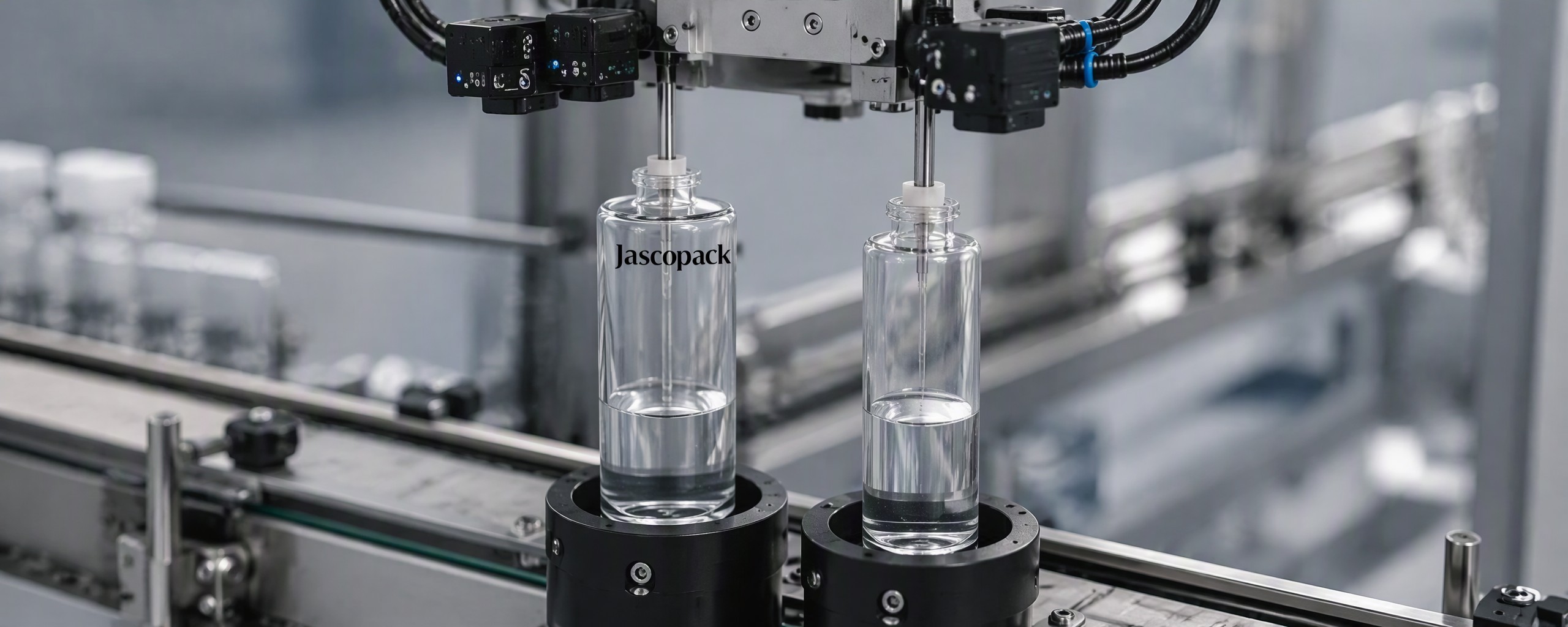
For larger production volumes, many brands choose semi-automatic or fully automatic filling equipment to improve efficiency and achieve more consistent filling results.
Before mass production begins, the filling parameters need to be adjusted according to the bottle structure, neck size, filling volume, and production requirements.
Common Issues When Developing Refillable Perfume Bottles
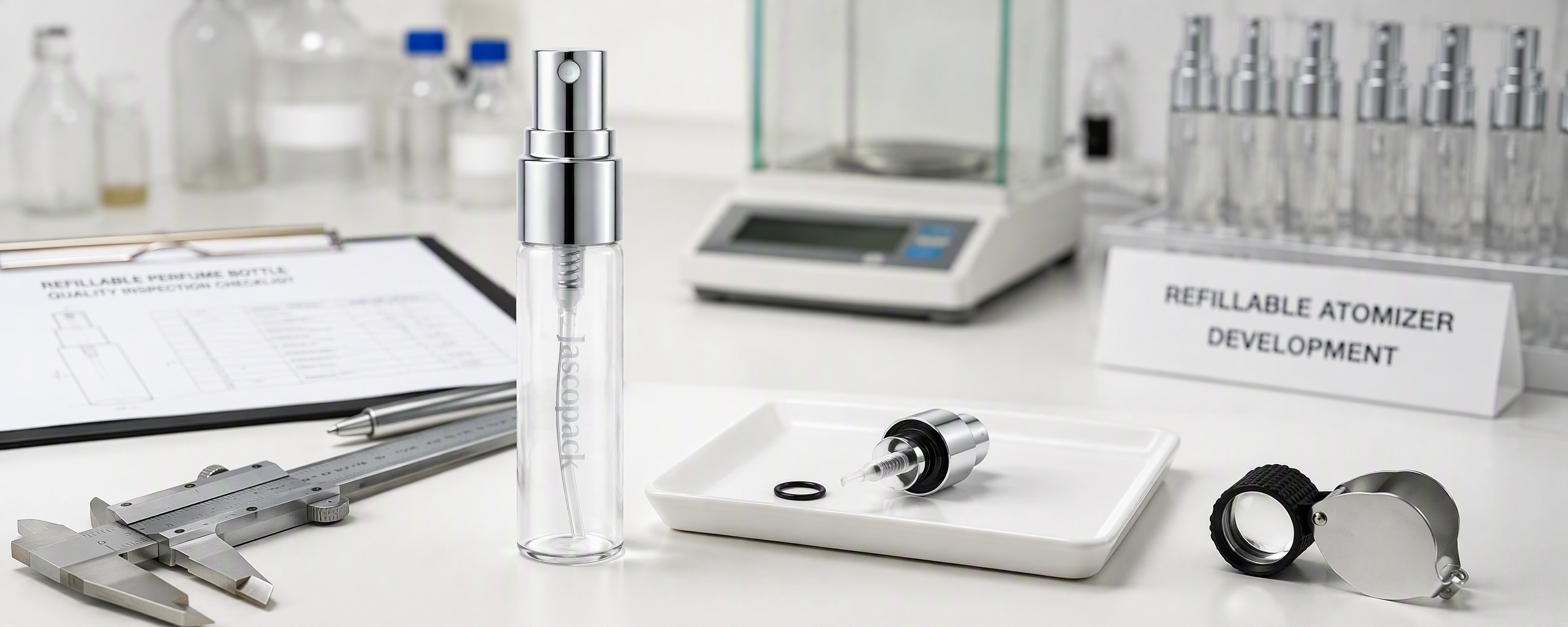
A refillable perfume atomizer can be opened and reused, but repeated refilling may gradually affect its sealing performance over time.
Sealing gasket displacement: During pump removal, the gasket may stick to the bottle opening or move out of position. If it is not installed correctly again, sealing performance may decrease and leakage may occur.
Seal material degradation: After long-term contact with perfume formulas, some sealing materials may experience changes such as swelling, shrinkage, or deformation. Repeated opening and reassembly may further increase gasket wear and reduce sealing reliability.
Thread wear: Repeated opening and closing can gradually wear the threads on screw-neck bottles, affecting the connection between the bottle and spray pump.
Bottle neck damage: Incorrect use of removal tools can leave scratches or small chips on the glass neck. Although these defects may not be obvious immediately, they can become larger during transportation or storage.
How Can Long-Term Stability Be Ensured for Refillable Perfume Bottles?
Storage Conditions
For long-term storage, perfume bottles should be placed in a dry environment away from direct sunlight and excessive humidity. Proper storage conditions help preserve the fragrance formula and reduce stress on sealing components.
Spray System Design
The spray system needs to match the fragrance formula. Otherwise, problems such as nozzle clogging, unstable spray patterns, or sealing issues may appear after filling.
Nozzle Clogging Risk: Nozzle size, atomization channel design, and spray dosage should match the fragrance formula. Alcohol concentration, fragrance oil content, and viscosity can all influence spray performance.
Seal Degradation: The gasket material needs to match the perfume formula. Incompatible materials may cause swelling, shrinkage, or deformation after extended contact.
Spray Performance Testing
Before mass production, we will carry out formula compatibility, spray test, sealing test and other functional tests.
Continuous press life test: press the spray bottle repeatedly by the machine to confirm that the spray performance will not decline due to long-term use.
Spray stability control: the deviation of single spray volume needs to be controlled within the tolerance range to ensure the uniformity and delicacy of each use.
Sealing test: upright/inverted perfume bottle, high/low temperature and transportation simulation test, etc., to confirm that the refilled perfume bottle has no leakage, and the transportation and daily use are safe and reliable.
Conclusion
Choosing the appropriate bottle structure and filling process at the early development stage can help avoid issues such as leakage and unstable spray performance during production. Jascopack supports perfume brands with bottle customization and manufacturing services from product testing to mass production.
FAQ
Which brands are more likely to use refillable perfume bottles?
Refillable perfume bottles are ideal for brands developing sustainable perfume packaging lines or long-term fragrance collections, especially mid-to-high-end perfume brands and custom fragrance brands.
Can refillable perfume bottles affect spray performance?
Yes. Repeated opening and refilling may affect sealing performance and spray consistency over time. Before launching a refillable perfume product, brands usually test the bottle with their own formula through spray tests, leakage tests, and repeated opening checks.
What customization options are available for refillable perfume bottles?
Yes. Refillable perfume bottles can be customized in areas such as color, capacity, surface finish, logo decoration, and packaging. These details can be adjusted according to your product positioning and market requirements.